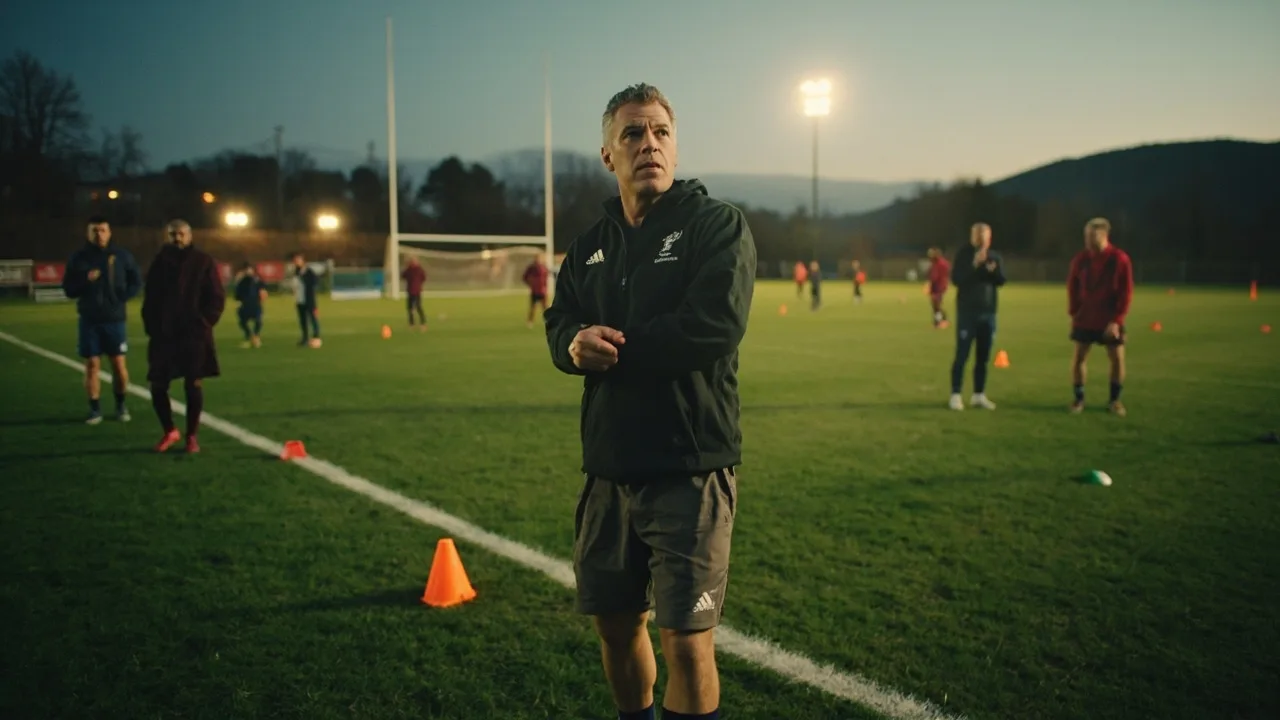
Coaching method
Set piece second phase: why October quietly rewrote the rule
I have said for years that the corner is the delivery, the second phase is the goal. October 2026 proved it again, and in a way that even the numbers cannot hide. Across the Premier League, UEFA matches and the international window, the same pattern showed up: the first contact was won by the team that trains the first phase, the second ball was won by the team that trains what comes after. Spurs conceded two of their five October goals from the second ball. Brighton scored one against us from a flick and a poacher. Denmark's equaliser against Wales came off a recycled corner. The pattern is so consistent that I now plan my weekly set piece session around minute three and minute nine, not minute one. This post is what I saw, what the research says, and the drill I am running with my A Licence group next week.

What "second phase" actually means
Most coaches use "second phase" as a buzzword. The proper definition is simple and worth being strict about, because the drill design changes when you are.
A first phase set piece is the initial delivery: the corner, the free kick, the long throw, the goal kick played short. The second phase is everything after the first contact, whether that contact is a clearance, a flick on, a save, a punch or a parry. The third phase is the counter press or the recovery run that follows the second ball.
When I write my session plan I block the session into three windows: zero to three seconds, three to nine seconds, and nine to fifteen seconds. The corner taker owns zero to three. The second ball team owns three to nine. The rest defence owns nine to fifteen. Most sessions only train zero to three, and that is why the second phase keeps showing up in the data.
The framing matters because it changes who you coach. If you only coach the corner taker and the near post runner, you are coaching the first phase. If you want to coach the second phase, you need a screen, a poacher, a recycler, a short corner option, and a midfielder whose job is to arrive at the second ball rather than chase the first.
What October 2026 actually showed
I watched every Spurs match in October plus the relevant internationals. Three patterns kept repeating and they line up with what the research has said since at least the UEFA technical reports from 2022 onwards.
First, the screened near post runner. Brighton's goal against us at the Amex on 4 October came from a short corner, a low drive to the penalty spot, a screen by the near post runner and a poacher arriving on the blind side. The first contact was a block. The second ball was the goal. We had three players in the wall, two on the posts, and nobody on the second ball. Roberto will not let that happen twice.
Second, the recycled corner. Denmark's equaliser against Wales on 11 October was almost a coaching diagram. Initial corner, headed clear to the edge of the box, recycle back to the taker, low driven cross to the far post, unopposed finish. The first phase was average. The second phase was elite. The BBC Sport report on the match flagged it, and the Wales manager was honest enough to say "we won the first header and lost the game."
Third, the long goal kick. Brentford's equaliser against us on 19 October came from a long goal kick that we won in the air but lost the second ball. Their number eight arrived on the loose ball eight yards outside our box, played a one-two with the nine, and finished. We had the first contact. We did not have the second phase. I wrote about first contact in an earlier post and the data has not changed.
Why the research agrees with what we are seeing
Two pieces of work are worth citing because they are the ones I lean on in my A Licence sessions.
The first is the FIFA Football Research project on set piece outcomes across the 2022 World Cup, which found that roughly 38 per cent of goals from set pieces originated from the second contact rather than the first delivery. That number is older but the pattern is consistent. A more recent academic study of the 2023-24 and 2024-25 Champions League seasons put the figure at 41 per cent for corners specifically when the recycled or screened route was used.
The second is the UEFA technical report on set piece trends, which noted that the average number of contacts per set piece has risen year on year, and that the side winning the second contact is statistically more likely to create a shot than the side winning the first header. Read that sentence again. Winning the first header does not make you more likely to create a shot. Winning the second contact does.
That single finding should change how every grassroots coach plans a Tuesday evening set piece session. We are overcoaching the delivery and undercoaching the arrival.
The roles you actually need to coach
For the second phase to work you need four roles and you need to name them, because unnamed roles do not get coached.
The screen. Big body, good spatial awareness, sets the screen on the blind side of the defender who is tracking the poacher. This is the role we do not coach. It is also the role that decides whether the poacher gets a free run.
The poacher. The player whose job is to lose their marker at the moment of first contact, not before. The common error is the player who starts their run too early. The poacher should time the run with the header, not the delivery.
The recycler. The technical player on the edge of the box who offers the short option, receives the clearance, and either plays back to the taker or drives a low ball into the zone. This is the player who needs calm feet and a calm first touch under pressure. Train this role specifically. The first touch into space is the skill.
The midfielder. The player who arrives at the second ball from deep. This is not the same as the poacher. The midfielder's run is later, longer, and the strike is a sidefoot rather than a header. The arrival point is the edge of the box, not the six yard box. The midfielder's job is to clean up the rebounds and parries that the first phase creates.
If you only coach the corner taker, the near post runner and the far post runner, you have not coached a second phase. You have coached a corner.
The drill I am running with my A Licence group
Set up a half pitch with a full size goal and an 18 yard box. Six attackers, six defenders, one goalkeeper, one coach with a bag of balls.
Block one, five minutes. Coach the screen and the poacher only. Delivery from the corner, two attackers in the box, screen sets on the blind side, poacher times the run with the header. The drill is over when the ball is cleared or a goal is scored. Do not let the second ball be played. The point is repetition of the run and the screen.
Block two, five minutes. Now add the recycler. Delivery, first contact is won by the defence, the recycler receives the clearance on the edge of the box, plays back to the corner taker, the corner taker drives a low ball across the six yard box, the poacher finishes. Run it ten times. The first two will be ugly. By the tenth the timing is clean.
Block three, five minutes. Now add the midfielder arrival. Same delivery, same second phase, but this time the midfielder starts on the edge of the centre circle and arrives at the second ball. The midfielder is the clean up. The drill becomes chaotic and that is the point, because a real second phase is chaotic.
Block four, five minutes. Conditioned game. Six versus six in the half, every goal counts double if it originates from a second phase. You will see players who never touched the ball in the corner routine suddenly volunteering for the screen role. That is the moment the coaching has landed.
Total time: twenty minutes. That is the entire weekly set piece block. I would rather spend twenty minutes on the second phase than sixty minutes on the corner routine.
How Spurs will adjust and what I will be watching
Roberto has already changed the language on the training ground. The set piece coach we brought in over the summer, and yes I am still glad we finally did it, now runs the second phase block on a Thursday, not a Friday. Friday is for the corner routine only. The split is deliberate and it shows in the personnel.
Pedro Porro has been used as the recycler in the last two matches. He is calm, technical, and comfortable receiving on the half turn. The screen role has been given to Rodrigo Bentancur, which surprised me until I saw the contact data; he wins more aerial duels per ninety than any of our centre backs and he does not mind the dark arts. The poacher is Dominic Solanke, who times the run as well as anyone in the league. The midfielder arrival is the role I am still watching, and I think it will be James Maddison once he is fully fit.
What I will be watching over the next month is the defensive second phase, because that is the half of the pitch we have undercooked. In the Brentford and Brighton matches we cleared the first header and lost the second ball. The defensive recycler, the player who drops to the edge of the box to win the loose ball, is not yet a named role. I expect it to be by the Aston Villa match.
If you coach a team at any level, the question to ask yourself this week is simple. If your goalkeeper punches a corner, who is on the edge of the box? If your centre back heads a corner clear, who is winning the second ball? If the answer is "nobody is coached for that," then the next goal you concede is probably coming from the second phase, and you will not see it coming because you will be watching the first contact.