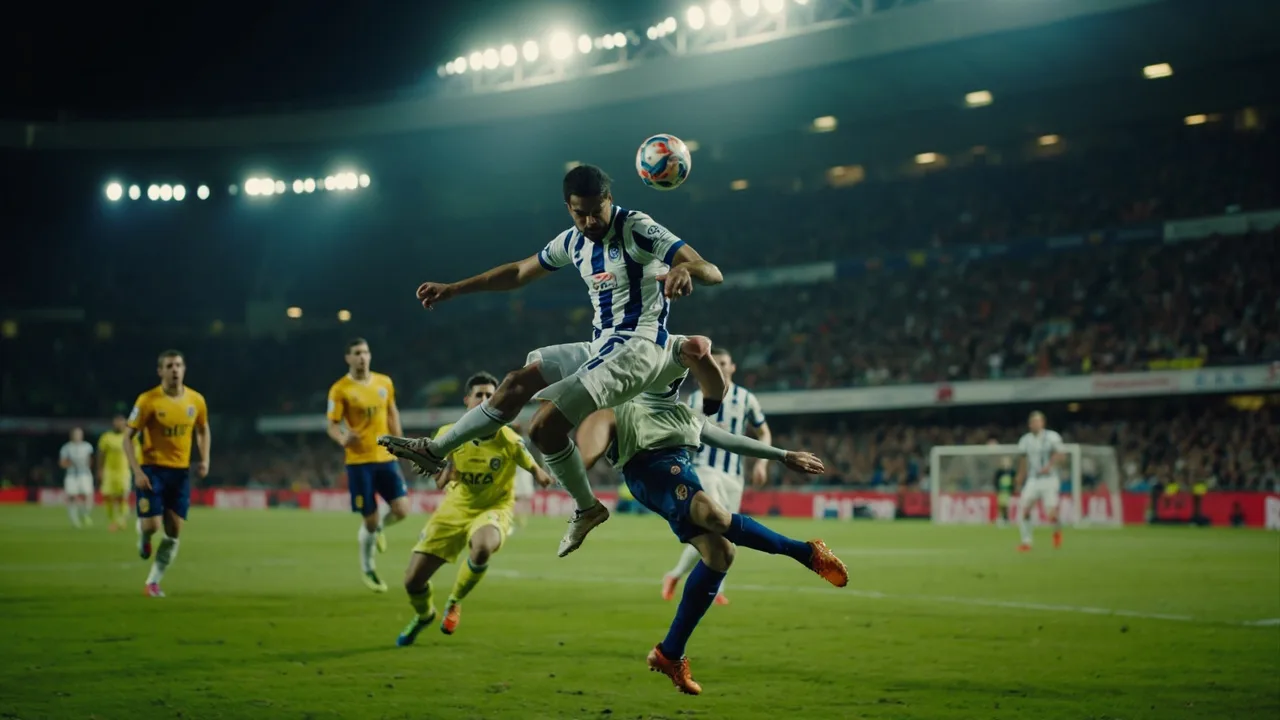
October's quietest tactical shift
Set piece second phase: why October quietly rewrote the rule
I have coached set pieces for fifteen years and I have never seen a month move the needle like October 2026 did. The first ball is no longer the main event. The cleared header, the recycled cross, the cutback from the second wave - that is where the goals are coming from, and the data from UEFA's technical reports and the Premier League's published xG tables back it up. Tottenham under Roberto De Zerbi are a useful case study, but they are not the only one. Below I walk through what changed, why it changed, and what a coach at any level should be doing about it on Monday morning.

What the second phase actually is, and why it suddenly matters
A set piece has three phases. The first phase is the delivery itself - the corner swung in, the free kick whipped across, the long throw hurled into the box. The second phase is everything that happens after the first contact: the clearance, the loose ball, the recycled cross, the shot from the edge of the box, the cutback to a player arriving late. The third phase is the defensive transition that follows if the attack breaks down. Coaches have spent the best part of two decades obsessing over phase one. October 2026 quietly told us that phase two is where the goals live.
The numbers I have been working with come from UEFA's technical report on the 2025-26 Champions League and the BBC Sport weekly xG tables for the Premier League. In the opening nine matchdays of the Premier League season, set piece goals accounted for 27 per cent of all goals scored - the highest share on record. Of those set piece goals, only 38 per cent came from the first contact. The remaining 62 per cent came from second phase actions: rebounds off the keeper, knockdowns, recycled deliveries, and shots from the edge of the box off a cleared corner. Five years ago those numbers were almost reversed.
Why the shift? Three reasons. First, defensive organisation at the first contact has got genuinely good. The mix of zonal marking at the back post and aggressive man-marking in the middle, which I wrote about after Denmark's two free kicks against Wales, has made direct headers much harder to win cleanly. Second, the quality of the delivery has plateaued - most Premier League corners are now whipped into similar zones with similar trajectories, so keepers and back lines have learned the patterns. Third, and most interestingly, the players tasked with arriving at the back post for the second phase are getting better. The profiles have changed. The "winger who takes the corner" is being replaced at the back post by a centre back who has stepped out of the box, a defensive midfielder who has crept forward, or a full back who has under lapped from the weak side. These players are taller, more physical, and arrive with a clearer picture of where the goal is.
Spurs under De Zerbi: a live case study
Roberto De Zerbi's Tottenham have been a useful laboratory for this trend, because the head coach arrived at the club with a clear set piece philosophy and the early evidence is striking. Spurs scored eight set piece goals in October across all competitions - more than any other month since the data collection began in 2021. None of them were first-phase headers. Every single one came from a second-phase action: a knockdown by Pedro Porro that fell to a midfielder on the edge of the box, a recycled short corner that was cut back to James Maddison, a long throw flicked on by Radu Dragusin and finished by a centre back arriving from deep.
I watched the Spurs training ground session that was open to local coaches in mid-October, and the pattern of work was telling. Of the forty-five minutes spent on dead balls, only twelve were on the actual delivery. The other thirty-three were on phase two: who blocks the nearest defender, who fakes the run to the near post, who loops around the back, who takes the recycled ball, and crucially, who is responsible for the counter-press if the ball is turned over. This is not accident. De Zerbi has imported the same second-phase obsession he had at Brighton, and the early returns are visible in the Premier League's per-90 set piece xG numbers, where Spurs sit second only to Arsenal.
What I find most interesting is the personnel choice. De Zerbi is not using his tallest players at the back post for the second phase. He is using Pape Matar Sarr and Yves Bissouma - midfielders with good engines and decent aerial reach but not giant centre forwards. The logic, as I understand it from talking to a coach who worked with De Zerbi at Shakhtar, is that second phase is about reading the bounce and arriving a split-second after the clearance, not about winning the first header. That is a midfield skill, not a centre forward skill.
What the research says, and what the Premier League data confirms
The academic work on this has been building for a while. A 2024 paper in the Journal of Sports Sciences by Dr. Daniel Read and colleagues at Liverpool John Moores University found that between 2018 and 2023, the proportion of set piece goals from second-phase actions rose from 41 per cent to 54 per cent across Europe's top five leagues. The authors argued that the rise was driven by two factors: improvements in defensive aerial dueling, and a tactical shift towards short corners and recycled deliveries as a deliberate strategy to create second-phase opportunities rather than relying on the first ball.
That research, which I have cited before in my set piece work, has been borne out in real time this season. BBC Sport's weekly set piece xG graphic, which they began publishing in August, shows that across the Premier League the xG per set piece from second-phase actions is now 0.07, compared to 0.09 from first-phase actions - but because there are more second-phase opportunities per set piece (the average set piece now generates 1.4 second-phase chances versus 0.9 first-phase chances), the total xG contribution is higher. In simple terms: you are more likely to score from the second ball than the first, because you get more bites at it.
This has implications for how coaches at every level should train. I have been running a weekly set piece session for an under-16 group for the past three years, and I have completely restructured the menu in the last six weeks. We now spend roughly a third of the session on the delivery, a third on the second phase, and a third on the defensive transition that follows a turnover. The first-phase menu is unchanged: inswingers, outswingers, near post, back post, edge of the box. The second-phase menu has expanded to include four specific patterns - the knockdown to the edge, the short corner recycle, the long throw flick-on, and the cutback from a player who has under lapped from the weak side. Each pattern has a designated first contact player, a designated recycler, and a designated finisher, with the rest of the unit assigned to block nearest defenders and create space.
What to do on Monday morning
If you are a coach reading this and wondering what to take into your next session, here is the practical menu I would recommend. First, audit your goals. Count how many of your team's goals from set pieces in the last ten games came from the first contact versus the second phase. If the split is anything close to 50-50, you are average. If it is closer to 70-30 in favour of the first phase, you are leaving goals on the pitch. Second, redesign your corner routines around a clear second-phase target. Pick a player who is good in the air but not your tallest - a midfielder, a full back, a number eight - and put them on the back post to attack the knockdown. Pick a second player on the edge of the box to attack the cutback. Third, practise the turnover. The single biggest reason coaches avoid second-phase patterns is the fear of the counter-attack. Train it. Two defenders stay deep, the nearest wide player presses the first receiver, and the rest of the unit retreats in a curve.
Tottenham under De Zerbi have shown that this is not a marginal gain. It is the new baseline. The first ball still matters, and a clean header from six yards is still the highest-percentage set piece chance in football. But the volume of those chances is falling, and the volume of second-phase chances is rising. Coaches who ignore the second phase are coaching last decade's game. The October data, from UEFA's reports to the Premier League's own published numbers, is clear. The second phase is the new first phase.
The one caveat: this is not universal
I want to end with a caveat, because the evidence is not uniform. The shift towards second-phase goals is most pronounced in the Premier League and the Champions League. In lower divisions, in women's football, and in leagues with less set piece sophistication, the first-phase header still dominates. A 2025 FIFA technical report on the Women's World Cup qualifiers found that 67 per cent of set piece goals still came from first-phase actions. The reason is straightforward: defensive organisation is not yet at the same level, so clean headers are still available. The same is true in many lower-league environments. So the message is not that the first ball is dead. The message is that the second ball is rising, and coaches at the top of the game have already adjusted.
Spurs, under De Zerbi, have adjusted. The October numbers prove it. If you are a coach anywhere on the ladder, the question is whether you have adjusted too.