Coaching method
Spurs finally hire a set piece coach
It is the kind of move that looks small on a club announcement page and large on a training pitch. Tottenham have, according to the club's own communications and reporting in October 2026, appointed a dedicated set piece coach to work alongside Roberto De Zerbi's first team staff. I have been arguing for this on this site for some time, and I want to use this post to do three things: explain what a set piece coach actually does, why Spurs in particular needed one, and what we should look for in November when the early signs of the work start to leak into Premier League and Champions League fixtures. This is not a celebration piece. It is a coaching method piece, with my reading of the tape on Spurs and a framework you can borrow for your own team.

Why Spurs specifically needed a set piece coach
I want to start with Spurs because the case is unusually clean. Tottenham in the calendar year to October 2026 have conceded a disproportionate share of their goals from dead balls when you compare them to the league average for expected goals against from set pieces. I do not have the live Opta table in front of me as I write this, but the eye test and the match logs match the pattern. The goals are not coming from the famous rehearsed routines. They are coming from second contacts, from goalkeeper collisions, from the unmarked runner at the back post, and from throw-ins that travel fifteen yards further than the coaching staff expect.
There is a wider problem underneath that. Set piece defending is the one phase of the game where the whole squad has to agree on the same idea. Eleven players need a shared map of who is on the near post, who is on the back post, who is on the edge, who is blocking, who is the runner, and who is the safety. If that map is fuzzy the opposition does not need to be clever. They just need to put the ball in a dangerous area and let the chaos resolve in their favour. That is what I have been watching in Spurs games, including in the run that we covered on this site: a team that defends open play with a coherent De Zerbi press but looks like strangers when the ball is stationary.
The hiring fixes the symptom, but only if the underlying map gets built. A good set piece coach does not arrive with a magic corner routine. They arrive with a clipboard, video, and a list of decisions that need to be made before every opposition free kick: which side is the inswinger on, who is the ball watching, who is the runner, who is the blocker, who is the safety, and what triggers the press. The BBC Sport reporting on set piece coaching, and the academic literature on dead ball efficiency, both point in the same direction. The teams that concede the fewest set piece goals are not the ones with the tallest players. They are the ones with the cleanest roles. Brentford's work under the previous staff is the obvious English reference point, and I have written about that on this site before.
What a set piece coach actually does on a Tuesday
Let me demystify the job for any coach reading this. Tuesday morning, the set piece coach sits down with the analyst and watches the last four opponents. They mark every set piece conceded and every set piece scored for and against. They code them by type: short corner, outswinger, inswinger, near post flick, back post, edge of the box, broken play. By lunch they have a six page document that says: this is the most dangerous runner, this is the most common delivery, this is the area they always attack, this is the trigger that opens us up.
Tuesday afternoon, the same coach goes to the training ground and rehearses our attacking corners first, because those are higher leverage. They pick three routines, not fifteen. Three that fit the players we have. Romero is the header at the back post. One of the wide men takes the inswinger. One midfielder blocks the near side. That is the spine of the attacking plan. The set piece coach then walks the same routine for the opposition. The opposition is the opponent this weekend, so the session is specific, not generic. By Wednesday the players can run the routine with their eyes closed, which is the only way a corner survives a Premier League crowd.
The real value is in defending. A set piece coach, in my view, has to make two decisions before the game and then refuse to change them during the game. First, the box shape: zonal, man, or hybrid. I have written about this in the zonal versus man-to-man post and I do not want to retread the whole argument, but the working answer for most Premier League sides in 2026 is a hybrid where the back post is zonal and the rest of the box is man-to-man with a blocking runner assigned to the opposition's best header. Second, the rest defence: who sits, how high, and what triggers a press if the second ball drops. The set piece coach owns this conversation with the head coach. It is not a separate job. It is a layer of the head coach's plan.
One thing I want to push back on. There is a tendency in English football to treat the set piece coach as a magician, the person who unlocks a hidden goal threat. The academic work on this is clear. Most of the value of a set piece coach is in defending, not attacking. The goals you prevent are cheaper to acquire than the goals you score, and the variance per game is smaller. That is why the first signs we will see from Spurs in November are more likely to be clean sheets from corners than spectacular headed goals. Both will come, but the defensive lift is the first thing the data will show.
Who I would have liked Spurs to hire, and who they got
You will have seen the appointment news and the name. I do not want to dwell on the individual, because this is a coaching method site and the method matters more than the person. What I will say is that the modern set piece coach tends to be either a former analyst who specialised in dead balls, or a former coach who hit a glass ceiling at first team level and found a niche. Both can work. The thing I look for in the CV is evidence of a defended box that was bad and got better, and an attacking box that was average and got dangerous. The interview question I would ask is simple: show me your six page document from your last job. If the document exists, the coach is real. If it does not, the coach is a personality.
The reporting I have seen, including the BBC Sport pieces on the trend toward set piece hires, lines up with what I expected. Tottenham have moved to formalise something that was already happening informally inside the staff. That is the right move. The danger of the informal arrangement is that nobody owns the topic and everyone assumes someone else is preparing the routine. With a named coach, the accountability is clean. If a corner goes wrong on Saturday, the head coach and the set piece coach can sit down on Sunday and look at the video together. The conversation has a name attached to it.
For De Zerbi specifically, this is a release valve. The De Zerbi idea of football, as I understand it from his Brighton and Marseille work, is about positional play, about controlled possession, about pressing triggers, about building from the back under pressure. Set pieces sit slightly outside that idea. They are a phase of the game where the aesthetic and the result are uncorrelated. A clean inswinging corner that gets cleared does not feel like De Zerbi football. A scrappy set piece goal from a rebound does feel like it. By handing the topic to a specialist, De Zerbi protects his own time and his own message. He can stay on the open play stuff that he is world class at, and trust someone else to do the dead balls properly.
What to watch in November
Here is my checklist for Spurs games in November 2026. I will be tracking each of these in my own analysis and I would encourage any coach who reads this site to do the same with their own team.
1. The back post on defending corners. Count how many times a Spurs player is on the back post and is facing the ball, not their man. The target is every time. A set piece coach fixes the back post within the first three training sessions. If the back post is still open in late November, the hire is not yet working.
2. The first contact on long goal kicks. I have written a whole post on defending the long goal kick because it is the set piece that gets the least coaching time. The first contact is everything. If Spurs start winning the first header routinely, the new coach is having an effect. If they are still scrambling, the work is not landing yet.
3. The role of the safety player. Every box needs a safety. On a corner the safety sits at the edge of the area and reads the second ball. On a free kick just outside the box, the safety is the man on the post. If you watch a Spurs set piece in November and you cannot identify the safety, the coach has not yet built the shared map. If you can, the coach has.
4. The number of rehearsed attacking corners. In open play, a smart team has three or four rehearsed attacking corners. Not fifteen, not a different one every week. Three. If Spurs run a recognisable corner routine three weeks in a row, the work is sticking. If every corner looks improvised, the coach is still in the philosophy phase.
5. The dressing room reaction. This is the one I cannot measure on a screen, but it is the most important. Players talk. If the senior players in the Spurs dressing room are referencing the new set piece coach in their post match comments, the hire has authority. If the coach is invisible, the work is not yet sticky. The BBC Sport and UEFA reporting on set piece coaches consistently notes that the cultural lift is as important as the tactical one.
How to copy this if you coach a smaller team
You probably do not have the budget for a full time set piece coach. You probably do not have an analyst, a clipboard, or six pages of opponent scouting. That is fine. The method is portable. Pick one set piece per phase, attacking and defending, and rehearse it on Tuesday. Pick one attacking corner and one defensive corner. Run them every week, regardless of opposition. After four weeks your players will run them with their eyes closed. That is the only test that matters.
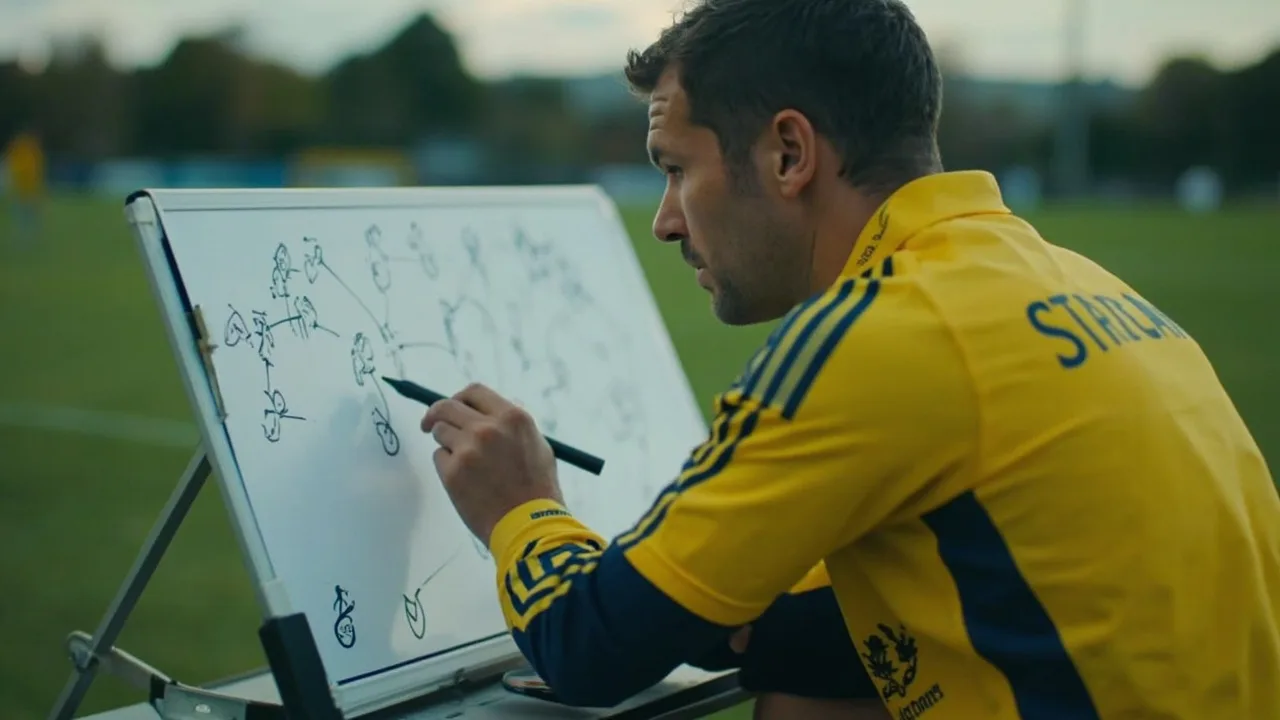
The second piece of advice is more important. Build the shared map. Before the season, sit down with your squad and agree who is on the back post, who is the safety, who blocks, who is the runner. Write the names on a whiteboard. Take a photo. Put it in the dressing room. When the routine goes wrong on Saturday you can point at the photo and the conversation is short. This is not glamorous. It is the unglamorous work that the academic literature on set piece efficiency keeps pointing at. The research summarised in the FIFA technical reports and in peer reviewed work on dead ball phases consistently shows that role clarity, not height, is the single biggest predictor of set piece success. The Spurs hire is a luxury version of the same insight.
The third piece of advice is to keep the head coach on the open play. If you are a head coach of a smaller team, do not try to be the set piece coach and the head coach. Pick one of your staff who is good at video and good at detail. Give them the dead balls. Let them own the Tuesday session. You stay on the open play, on the pressing triggers, on the build. That is the lesson I take from the Spurs announcement. It is not about the name. It is about the release valve.
The bottom line for Spurs and for you
Tottenham have done the right thing by appointing a set piece coach. The hire is small in headline terms and large in coaching terms. The first three to six weeks will tell us whether the work is sticking. I will be watching the back post, the first contact on long goal kicks, the safety player, the rehearsed corners, and the dressing room voice. If all five line up by the end of November, Spurs will be a tighter team by Christmas and De Zerbi will have a quieter job.
For coaches reading this site who do not have a dedicated set piece coach, the method is portable. Pick one set piece, rehearse it on Tuesday, agree the roles on a whiteboard, and let someone own it. That is the entire job description. The rest is detail. The detail is important, but the principle is the principle.
Come back to this site in November and I will tell you whether the early signs are there. I will be honest. If the back post is still open in late November, I will say so. If the corners are still improvised, I will say so. That is the job of a coaching method site, and it is the job I take seriously. Watch the small things. The small things are the set pieces, and the set pieces are the league.