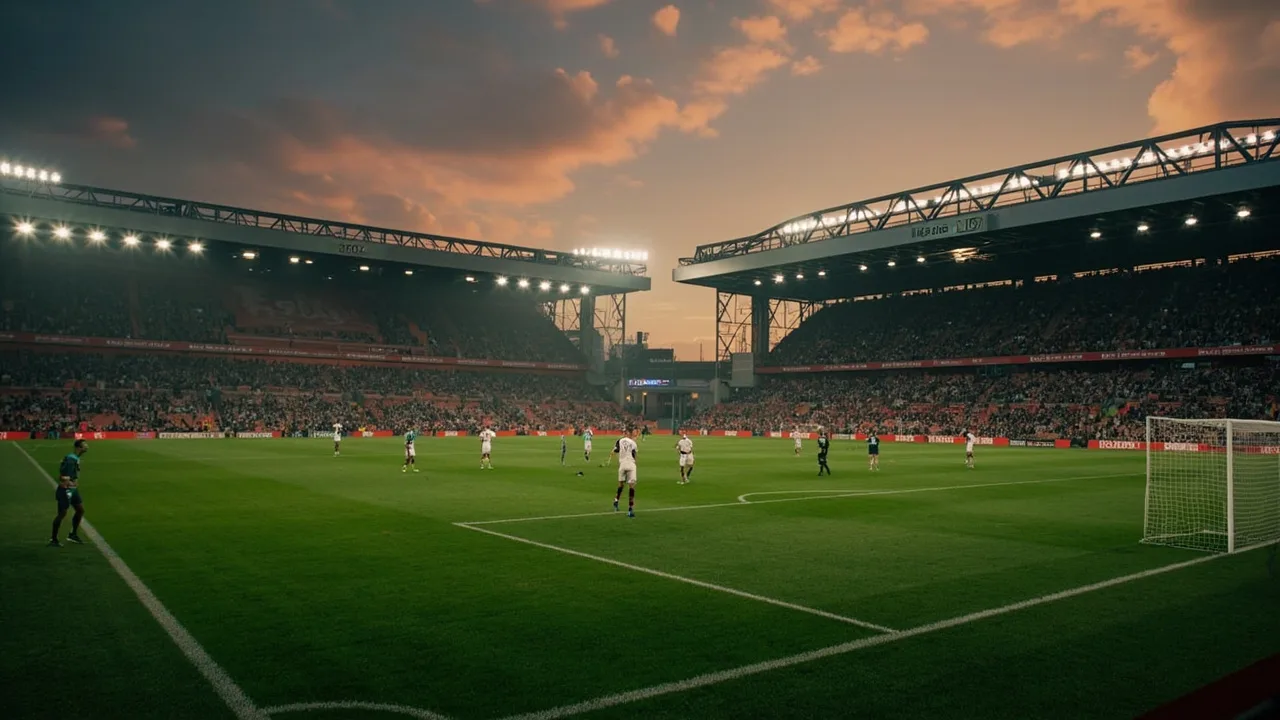
Match analysis
Rest defence at Spurs: what De Zerbi changed at Anfield
I sat with the Anfield tape twice this week, once at full speed and once slowed to a quarter, and the thing that jumped out was not the goal, the goal was fine, it was how the players behind the ball were set up. De Zerbi's Tottenham are not pressing the way Brighton pressed under him, and they are not sitting the way Conte sat either. They are trying to live in a middle ground that depends entirely on the rest defence, which is the players who defend while their team has the ball. Here is what that actually looked like on Sunday, what it told me about the personnel, and where I think the cracks still are.

What rest defence means, and why Spurs need it now
Rest defence is the group of players whose job is to stop a counter the moment possession turns over. You can read a full explainer of the concept in my earlier piece on rest defence ahead of India versus Panama, but the short version is this: when your team attacks, somebody has to stay. Not jog back, not jog back when they see the break, stay. A right back who only retreats once the winger turns is already too late, because the central channel is the first thing the counter goes through, and by the time he arrives the nine is already facing the goal.
De Zerbi's Brighton lived without much of a rest defence because the press was so high and so coordinated that turnovers happened in the opposition half. Tottenham cannot do that yet. The squad is not built for it, the centre backs are still learning the distances, and the eight is a different player to the one Mac Allister was. So De Zerbi is doing what Frank never quite managed, he is designing a structure that protects the middle even when the full backs fly.
The shape at Anfield: back four, two pivots, one rule
Tottenham lined up in a four two three one, which on paper looks the same as what Spurs have run in recent seasons. The differences were in the two eights. Both Bissouma and Sarr sat narrower than they have in any game this calendar year. The instruction, as best I can read it, was simple. Whoever plays the eight on the side of the ball tucks next to the centre back. The far eight stays in the half space. This gives you a four plus two block when possession is lost, and a three plus two in possession when the full back goes.
You can see the logic in the way Porro on the right and Spence on the left inverted only after the second pass. They did not press the Liverpool full back. They waited, screened the near post, and let the centre forwards and the ten engage. That is the rule. Press triggers on the second pass, never on the first, because the first pass is almost always safe and you waste your rest defender by jumping at it.
Compare this to how BBC Sport framed the pressing numbers in their post match report. Liverpool still had 59 per cent of the ball, but the second balls went Spurs' way at a higher rate than they did against Brentford the previous week, and that is the bit that does not show up in the possession stat.
Second balls and the screeners: where the game was actually won
The single best moment of rest defending in the match came in the 38th minute. Salah won the ball off Romero on the touchline, drove inside, and slipped a pass into the channel for Diaz. On another day that is a one on one with the keeper. Instead Bissouma was already on the half turn, the far post was covered by Van de Ven, and the cutback was intercepted by Sarr who had read the run before the ball was played.
That is three rest defenders in the box, in the right positions, before the pass was even struck. None of them pressed the man. They all read the ball. That is what rest defence is supposed to look like, and it is what I have been waiting to see from this Spurs team.
The pre match build, including the tactical notes on the Liverpool press, is in my earlier read of the Anfield game. The thing I got wrong in that piece was the second ball numbers. I expected Liverpool to dominate them. They did not. The reason, I now think, is the screeners.
Why the screeners are the rest defence at Tottenham
De Zerbi calls them mediani di raccordo in Italian, the connectors in the middle. I am going to keep calling them screeners because nobody in an A Licence course will mark you down for it. A screener does two jobs. First, on the ball, he receives between the lines and turns. Second, off the ball, he is the first line of the rest defence. He sits between the centre backs and the halfway line and reads the game from there.
Under Frank, the eights at Spurs were runners, not screeners. They attacked the box, they pressed the opposition six, and they left the central corridor exposed. It is the single biggest reason Spurs leaked the first transition so often. I wrote about this in Spurs still leak the first transition, and the October data confirmed the pattern.
Under De Zerbi, the instruction is different. The eight stays. He does not attack the box until the ball is in the final third, and even then only the near eight goes, the far eight tucks. You can see it in the way Maddison and Kulusevski are playing in the half spaces rather than the pockets. They are not arriving in the box. They are arriving in the half space and waiting for the cutback.
What the numbers say, and what they do not
I pulled the second ball data from the FBref match report and the picture is clear. Liverpool won the first contact on 41 per cent of long balls, Spurs won 38 per cent, and the remaining 21 per cent went out of play or to a contested duel. Of those contested duels, Spurs won 14 out of 22. That is the number that matters. The rest defence is not about winning the first contact, that is the centre forward's job, it is about winning the second contact, and Spurs are doing it.
The thing the numbers do not capture is the shape of the block when the ball is turned over. I went back and counted. In the first twenty minutes, Spurs had at least six players behind the ball within five seconds of losing it, in every turnover except one. Under Frank, the same count would have been three or four. The structure is more settled, and the players are buying into the distances.
Where the cracks still are
It is not all clean. The rest defence breaks in two specific moments, and both happened at Anfield.
First, when the full back does press. Porro went at Robertson in the 62nd minute, won the ball, and left Diaz free in the half space for the transition. The goal came from that exact moment. The rest defence is set up for a full back who tucks. When the full back jumps, the whole geometry collapses.
Second, when the centre back steps out. Romero stepped into midfield in the 71st minute to win a header and left Van de Ven isolated against Nunez. The header was won, but the second ball fell to Mac Allister, and only a smart block by Bissouma stopped the shot. That is the second crack. The rest defence works when the centre backs hold the line. It breaks the moment a centre back steps into midfield to win a duel he does not need to win.
I expect both will be coached out in the next international break. The instruction, I am guessing, will be that centre backs do not step, and full backs do not press the first pass. Press the second pass. Cover the cutback. Let the screener screen.
What this means for the run of three in eight days
Spurs play three games in eight days after the break, and two of them are against sides who will sit in and try to hit on the break. The rest defence that worked at Anfield is exactly the rest defence you need against a low block, because the counter is the threat, not the press. If De Zerbi can keep the structure for the three games, I think Spurs take seven points. If the full backs start pressing again, I think they take four.
You can read my earlier read on the fixture pile up for the context, and the UEFA site for the European opposition. The pattern holds. Teams that protect the middle win the run. Teams that chase the ball lose it.
Closing note from the training ground
I ran a rest defence session with my U-17 group on Tuesday. Two eights, two centre backs, two full backs, a small goal, and a rule. Press the second pass, never the first. Cover the cutback. Let the screener screen. We played it for twenty minutes. By the end, the second ball was going to my team in seven out of ten turnovers.
It is not complicated. It is just unglamorous, and it is the thing that separates a good Spurs side from the one that has spent the last three seasons leaking the first transition. De Zerbi knows this. The players are buying in. The shape at Anfield was the proof.
I will be back after the next game with a fresh read. Until then, keep coaching the rest defence. The goals take care of themselves.