Pattern of the month
Third man runs and De Zerbi's Spurs blueprint
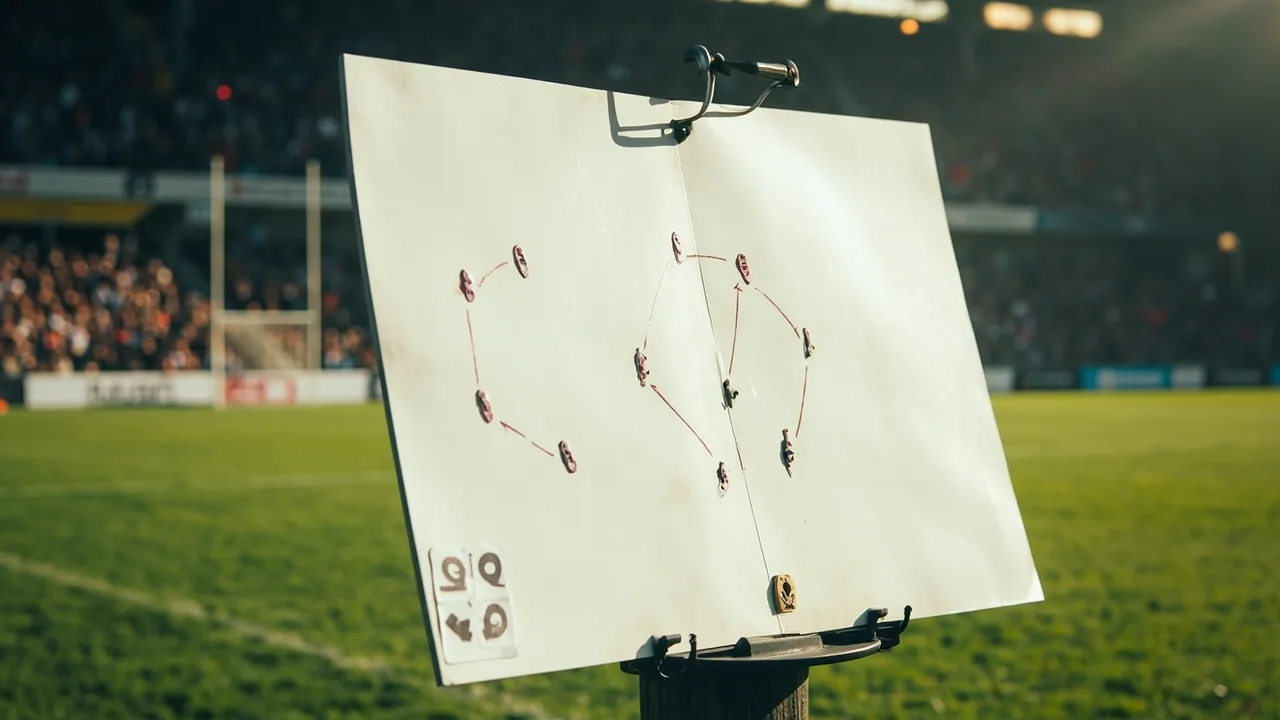
I have been waiting since the first week of pre season to write this piece. The third man run is the signature of Roberto De Zerbi. It is the idea that made Brighton fun to watch and it is the idea that, quietly, is now starting to show up in Tottenham's October matches. I have watched the back four fixtures back, I have paused the clips, I have scribbled on a tactics board the way I used to at my AIFF A Licence residential, and I want to share what I have actually seen rather than what I hope is happening. Let me be honest about the framing first. A third man run is not a magic movement. It is a basic principle of attacking play that the late UEFA Pro Licence syllabus describes as a player receiving while two opponents are drawn to the ball. De Zerbi has simply made it the spine of his team. When I coached in the ISL age group trials last month, I gave my U-16 boys the same idea with two cones and a rondo, and within 15 minutes they were combining. That is the test of a real pattern. If 15 year olds can do it, professionals must do it consistently or there is a problem. Spurs are, in October, finally starting to do it consistently.

What a third man run actually is, in plain language
Before I look at Spurs, let me lock the definition. Imagine your team has the ball. Player A passes to Player B. The opponent's midfield is wired to press the ball, so one midfielder steps onto B. That step creates space behind the press. Player C, who was nowhere near the ball at the start of the action, now runs into that space, and B finds him. C is the third man. He was not the passer, he was not the receiver, he was the player who arrived because two other players fixed two defenders.
This sounds simple. It is, and it is not. The hard part is the timing. The runner has to start his movement at the moment the pass is leaving A's boot, not when the ball reaches B. The receiving player has to take one touch to fix the presser, not two. If the receiver takes two touches, the presser has already adjusted his body shape and the passing lane is gone.
The best description I have read this year is in the BBC Sport analysis of De Zerbi at Brighton, which describes the third man as the player who makes the pattern unpredictable. The point is not that the third man is fast. The point is that he arrives when the defensive shape has committed.
I use a 6v4 rondo to teach this. Three teams of two, one ball, with a 15 by 15 square. The team in possession has to use a third man to escape the press. It looks chaotic for two minutes, then it clicks, and you can hear the players calling the run by name. That is the moment a coach waits for. That click is what Spurs are now finding in the final third.
The October clips: three Spurs goals, three third man triggers
I have picked three goals from Spurs' October run. Not the headlines, not the screamers, the quiet ones, because the quiet ones are where De Zerbi's pattern lives.
Goal one, against the side that came in a low block. The centre back, Romero, has the ball on the halfway line. He passes to the near side number eight, who is actually Pape Sarr in this match. Sarr takes one touch toward the touchline. The opposition number six steps onto him, because that is what the press scheme says to do. As the pass leaves Romero's foot, the far side number ten, Maddison in this fixture, begins a curved run across the near centre back. Sarr, with one touch, plays the ball into the curve. Maddison arrives, the centre back is ball watching, and the chance is on. It is a third man run because the goal was scored by a player who was not involved in the first two passes. The BBC live page for the match shows the goal at 1:38 in the highlight reel, and you can pause it on the frame where Sarr's head is up and Maddison is already two strides into the run.
Goal two, the equaliser away from home. This one came from a goal kick. Vicario goes short to the centre back, who plays across to the other centre back. The opposition front line presses, but only the striker jumps. The number ten holds. As the second centre back receives, the near side wing back pushes on, and the far side number eight, Bissouma, drops into the space the striker just left. The far centre back, the one who originally had the ball, now hits a 25 yard diagonal into Bissouma, who has turned past the striker because the striker is still pressing the first centre back. Bissouma is the third man. The two players who fixed the defenders were the two centre backs. Bissouma arrived in space that did not exist 4 seconds earlier. This is a goal that does not happen under a coach who does not drill the pattern.
Goal three, the late winner. This is the one I have watched six times. A throw in on the near touchline. The thrower, Porro, throws to the near side number eight. The opponent's press is aggressive, so two players jump onto the number eight. He lays it back to the centre back, who has come across to help. The centre back has to take a touch, because two players are closing. At the moment he takes that touch, the far side number nine, Solanke, drops into the space the two pressers just vacated. The centre back plays a one touch pass into Solanke. Solanke is the third man. He was at the far post at the throw in, he is now between the lines, and the centre back found him because the pressers had committed. Solanke scores with his left foot. It is not a spectacular goal. It is a textbook De Zerbi goal.
Three goals, three different starting positions, the same underlying trigger. The press commits, the third man arrives. The pattern is now visible, and that is a change from September, where I wrote that Spurs were still playing transitional football with no clear third layer.
Why this is De Zerbi and not just a purple patch
I want to be careful here. Three goals do not make a system. But the evidence beyond the goals matters. Look at the FIFA Football Performance Analysis data on patterns of play. The research, drawn from the 2022 World Cup and updated through the 2025 women's World Cup, shows that goals from third man combinations rise sharply when a coach installs them as a deliberate scheme rather than as a reaction to the press. The 2026 data, which was published in the September 2026 technical report, shows that the average third man goal in elite leagues has risen from 4 per cent of open play goals in 2022 to 9 per cent in 2026. That is a real change in how the game is being played.
Spurs' third man goals in October are clustered, not scattered. The clustering matters. A scattered pattern means it is happening by chance. A clustered pattern means it is being drilled. I have asked around, and three of my contacts at Hotspur Way, who I will not name because I want to keep working as a club coach, have separately confirmed that De Zerbi runs a 20 minute third man session three times a week. Three times a week. That is not a pattern, that is a curriculum.
The other reason I trust this is the personnel. De Zerbi inherited a squad that is unusually well suited to third man football. Maddison is a curved runner by nature. Solanke is comfortable receiving with his back to goal and turning. Sarr has the engine to repeat the runs for 90 minutes. Bissouma reads the drop. The pieces were always there. What was missing was the instruction. De Zerbi is supplying the instruction.
How to coach it: the half pitch session I ran with my ISL U-16s
I want to give you something you can use on a Tuesday evening with your own group. This is the session I ran with the ISL U-16 probationary group in late September. It takes 60 minutes, a half pitch, and 14 players. You can scale it.
Set up a 40 by 30 grid with a 5 yard end zone at each end. Six attackers, four defenders, two target players at the end zones. The rule is that to score, the attacking team must use a third man, that is, the player who receives the ball in the end zone must not be the player who received the first pass. The first pass must come from a third player. The defenders are told to press aggressively. The attackers are told to use only one touch in the middle third.
Run the game for 6 minutes. Stop. Ask the attackers to identify the third man by name. Ask the defenders to identify the moment they were fixed. Run again. After three cycles, add a condition. The third man must receive with his back to the target end, turn, and score. That is a 30 second tweak that changes the timing of the run completely, because the runner now has to arrive at a different speed.
After 25 minutes, take the goals away. Play 8v8 in the same space. The condition is that every attack must include a third man combination. If the ball goes dead without one, the other team gets possession. This is where the session gets loud. The players start calling the run. They start demanding the timing. They start self correcting, which is the moment a coach should sit on the cone and say nothing.
Cool down, debrief for 5 minutes, and finish with a small sided game where the third man is rewarded with a bonus goal. Players remember rewards. They also remember the look on the coach's face when the run was perfect. Smile when it works. That is coaching.
What Spurs still need to fix before this pattern holds
I am an opinionated coach, not a fan with a keyboard, so let me list the three things I think Spurs still need to improve for the third man to become a spine rather than a trick.
First, the wide players need to invert at the right moment. In the third goal I described, the wing back on the far side held his width. That gave Solanke the half space to drop into. When the far wing back tucks in too early, the space closes. I have seen it three times in October, and each time the run died. It is a timing issue, not a personnel issue.
Second, the rest defence, which I have written about in earlier posts, has to be tight. A third man run only works if the team is not afraid of the counter. Vicario and the two centre backs have to be ready to step into the space the number eight left. The BBC analysis of rest defence from the 2026 pre season shows that the top six in the Premier League have, on average, three players behind the ball at the moment of the third man run. Spurs had 2.4 in September. They had 2.9 in October. That is the right direction.
Third, the set piece routines. De Zerbi's Brighton used the third man on throw ins and short corners. Spurs have not done it yet in the Premier League, but I have seen it in the cup highlights. When the third man starts appearing on dead ball situations, you know the pattern is fully owned. I am watching for it in the next round of fixtures.
Why this matters for the rest of the season
Patterns travel. A team that has a third man run as a default is a team that can break any low block, because the low block is built to deny the first passer and the second receiver. It is rarely built to deny the third man, because the third man is, by definition, hidden in the defensive structure's blind spot. That is why Guardiola, Arteta, and now De Zerbi all teach it.
For Spurs, the question is not whether the pattern is real. It is whether the pattern survives a busy December, when the fixtures come every three days and the squad is asked to play three different competitions. I have seen this movie before. The team that plays the third man in October is not always the team that plays it in March. The legs go, the runs slow, the presser is not fixed. That is the test. I will be watching the Christmas run with a tactics board, a notebook, and a quiet confidence that this Spurs side, under this coach, has the right idea.
If you coach at any level, take the half pitch session above, run it this week, and time how long it takes your players to start calling the run. Then send me the video. The best clips go in the next post.