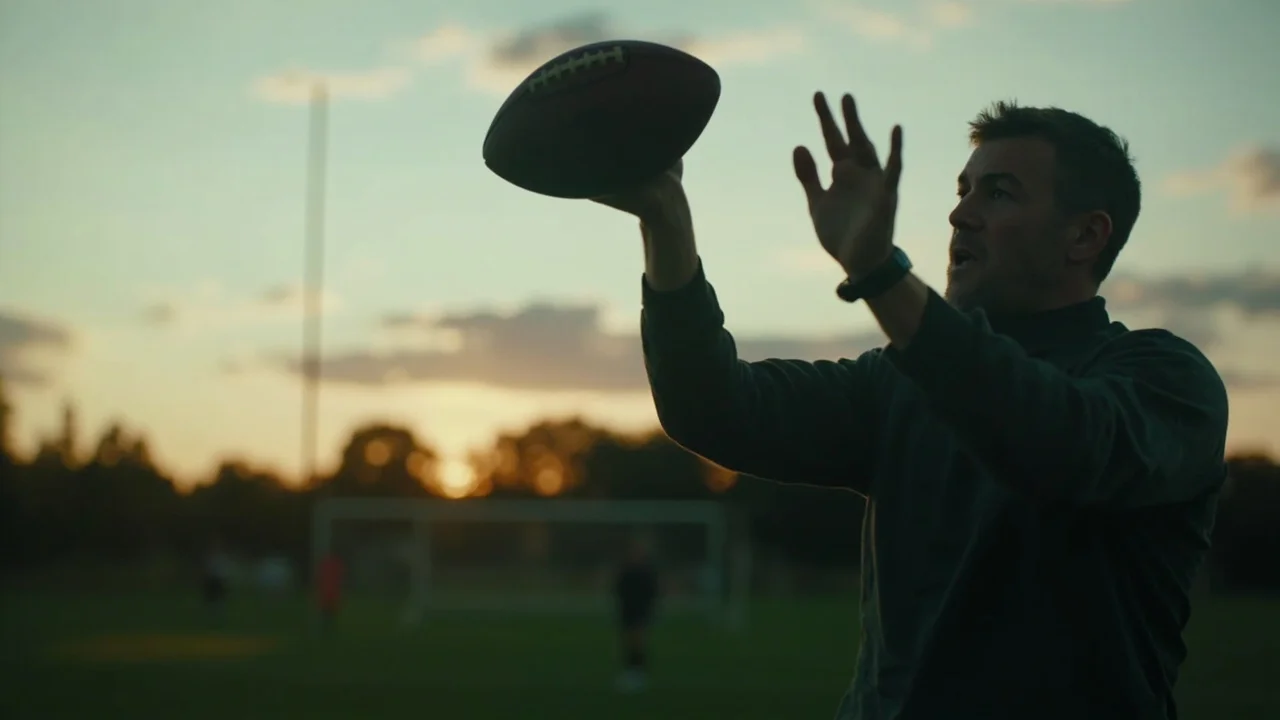
Coaching method
Throw-in coaching: Arsenal just hired a specialist
On 25 September 2026 Arsenal confirmed they had added the Danish throw-in coach Thomas Gronnemark to Mikel Arteta's staff. Almost nobody has heard of the role. Almost every coach in the professional game has heard of him. The work is narrow, the results are concrete, and the model is being copied. Here is what the job actually involves, what changed at Liverpool when Gronnemark was there between 2018 and 2024, and what an A Licence coach working in India or at the ISL academy level should borrow from it.

Why is Arsenal hiring a throw-in coach in September 2026?
The news landed on 25 September. According to a report picked up by Just Arsenal, Arsenal are set to add former Liverpool coach Thomas Gronnemark as a throw-in specialist, working alongside the existing set-piece coach Nicolas Jover. The Daily Star, which first carried the story, framed it as the next step in a project that has already produced a record-breaking corner count in the title-winning 2025-26 season.
For most of the football world, a throw-in specialist is still a strange idea. For about ten years now, the top of the European game has been quietly treating it as a serious discipline. Gronnemark has worked with Liverpool, Borussia Monchengladbach, Ajax and Midtjylland, and three of those clubs ended up in the same Champions League group. His website, Throwin Academy, lists fifteen league titles among the teams he has worked with. The job has stopped being a curiosity.
What did Gronnemark actually change at Liverpool?
Jurgen Klopp signed Gronnemark in the summer of 2018, after Liverpool had finished fourth in the Premier League and lost the Champions League final to Real Madrid. In Gronnemark's own first-person account for The Coaches' Voice, Klopp told him on that first phone call that Liverpool's throw-in play was a clear weakness. Gronnemark ran a session with twenty-one first-team players in his first week. He signed a half-season contract and stayed for six years.
The headline figure, repeated in Gronnemark's own words, is that Liverpool moved from 45.4 per cent ball retention from throw-ins in the season before he arrived to 68.4 per cent in his first. Sports Gazette records the same numbers. The improvement took Liverpool from eighteenth in the Premier League on that measure to first. By the end of his time at Anfield, fourteen of Liverpool's eighty-five league goals in a single season had come from situations that began with a throw-in.
The numbers behind the change
It is worth sitting with those numbers for a moment, because they are doing real work. Forty-five per cent ball retention from throw-ins means Liverpool were losing the ball, on average, more often than they kept it from one of the most common restart situations in football. Sixty-eight per cent is the kind of retention rate you would accept from a controlled passage in the middle third. The change is not from poor to acceptable. It is from poor to elite.
Gronnemark is careful, in his own writing, to point out that the figure is not just about his method. He works to the manager's playing style. As he put it to The Coaches' Voice: "It is really important to me when I go into a club that, first of all, I know the team's playing style so that I can find my training around that. I will always base my work on what the manager wants from his team." That caveat matters for any coach trying to copy the model without the institutional support.
What does "Long, Fast, Clever" actually mean?
Long, Fast and Clever is the name Gronnemark gave to his three-part framework. The framework is not, despite the name, an instruction to throw the ball as hard as possible. Each word describes a different family of throw-ins, and a coaching session works on all three.
Long means the technical capacity to throw the ball a long way. Gronnemark once held the Guinness World Record for the longest throw-in, at 51.33 metres, and he has helped Andrew Robertson extend his throwing range from about 19 metres to 27 metres. Long throws are useful in the attacking third, where a well-placed long throw can replace a wide free kick. Fast means quick, decisive execution before the defending team has organised. Clever is the one Gronnemark talks about most. A clever throw-in creates space before the ball leaves the thrower's hands. It uses the run before the throw, not the pass after it.
Space creation is the real idea
The through-line of Gronnemark's work, in his own words to Sports Gazette, is space creation. "The way I coach space creation is inspired a lot by basketball," he said. "In basketball there is so much space creation that goes on in open play and from the line, it is really exciting to see. In many ways you are in a similar situation when you take a throw-in." The basketball analogy is not decorative. It explains why Gronnemark trains his players to start their movement before the ball is in the thrower's hands.
In a typical session, the first throw is the easy one. After that, the team works in eleven-versus-eleven blocks, with the thrower solving a problem the defenders have set up. The thrower has to read the defence, pick the right throw, and execute it. That is the work. It looks like football, and it should, because the point is to make match situations feel familiar by the time the team gets there.
How many throw-ins does a team actually take?
Gronnemark's standard answer to the question "is this really worth a coach?" is the volume one. "There are between 40 and 60 throw-ins in any game of football," he told Sports Gazette. "And teams usually only retain possession on 50 per cent of occasions. If you had the same percentages with your feet you would be playing Sunday league football."
The 50 per cent figure is the one that should make any coach stop and think. In a 60-throw-in match, a 50 per cent retention rate is thirty moments where the ball is given back to the opposition without a contest. That is two thirds of a game's worth of open-play possession errors concentrated into one specific restart. Most coaches do not train for it, because most coaches assume it cannot be trained. Gronnemark's whole pitch is that it can.
Why is throwing the ball hard for elite players?
One of the more useful things in Gronnemark's account for The Coaches' Voice is his explanation of why the technique is so variable at the top level. Players who grow up playing in central midfield, he points out, may rarely have to take a throw-in as children. They become elite at everything with the ball at their feet, and then are asked, as professionals, to throw it. Foul throws are a symptom of that. So is the instinctive default of throwing the ball down the line.
That second behaviour, the down-the-line heave, is the one Gronnemark is trying to replace. It is the football equivalent of punting on third down: it returns possession to the opposition roughly half the time, and the occasions it does not are usually unconverted long throws into crowded boxes. In a possession team, it is a small leak that becomes a big one over sixty set-pieces a match.
Why speed is sometimes the wrong choice
A point that often gets lost in summaries of Gronnemark's work is that speed is not always right. He is on record, in the Sports Gazette interview, as saying the opposite. "Sometimes it is really good to throw the ball fast because the opponents are not organised," he said. "And sometimes it is the worst thing you can do. If you throw the ball fast into a pressure zone, you have a really high risk of losing it." The thrower has to read the situation in the second before releasing.
This is also why Gronnemark's work happens in eleven-versus-eleven, not in two-versus-zero. A thrower who only practices alone will default to fast. A thrower who has to read a defensive shape will sometimes choose slow, sometimes choose the short option, sometimes choose the diagonal long one. The session is built to give the thrower real problems to solve, not to drill a single technique.
The three types of throw-in
Gronnemark's framework distinguishes three throw-ins, and the session design reflects that. The first is the long throw-in, which he has helped several players extend technically. The second is the fast throw-in, which is about reading the moment before the defence settles. The third is the clever throw-in, which is the one with the pre-planned movement that creates a two-versus-one or a free runner in behind.
For Robertson and Trent Alexander-Arnold at Liverpool, Gronnemark has praised the accuracy of the medium-distance throw to feet. "Robbo and Trent are really good at throwing to feet for example," he said to Sports Gazette. "There are loads of throws in the ten-to-fifteen metre range where full-backs are throwing to the head or the chest; that is one of the main causes of possession loss." A throw to feet at fifteen metres is a different action from a throw to space at twenty-five. Both have a place. Most coaching treats them as one.
What does the defending team do about it?
The flip side is that a good attacking throw-in routine forces the defending team to defend with structure, which is itself a chance for the attacking side. A team that has rehearsed its throw-ins well takes fewer risks, because it knows the throw will arrive somewhere it can recover. A team that has not rehearsed them well takes the down-the-line default and invites pressure.
That is part of why Arsenal's plan, in the words of the Just Arsenal report, is to combine Gronnemark with the existing set-piece coach Nicolas Jover. Jover owns corners and free kicks. Gronnemark owns throw-ins. Together they cover the three restart categories. The clubs that have done this have, over the last five years, generally been the ones winning the small-margin games.
What should an A Licence coach borrow from this?
You do not need Gronnemark to take the model seriously. The first thing to borrow is the counting. Track your team's throw-in retention for a single match, even by hand. Count throws taken, count throws retained, divide. Most grassroots and academy teams will land somewhere between 40 and 60 per cent, the same range Gronnemark cites for the top level. If the number is below 50 per cent, the team is losing the ball more often than not from one of the most common restarts in the game.
The second thing to borrow is the session design. Run a session that is eleven-versus-eleven with a designated thrower. Pick a third of the pitch. Every time the ball goes out, the thrower has to deliver to a teammate without losing possession. Score the throwers. Score the defenders for blocks. Rotate the throwers. In three or four sessions, the team's instinct at throw-ins will start to change. The principle is the same as Gronnemark's: the throw is a small passage of play, not a separate event.
Why this matters for India and the ISL
Indian football, at the AIFF and ISL level, has spent the last decade investing in possession play, in pressing structure, and in the technical detail of build-up. Throw-ins have been a quiet exception. Gronnemark's own account of how Liverpool fixed it is worth reading for any coach working in that system, because the architecture is portable. The session does not require Premier League players. It requires a coach who treats the throw as part of the team's playing style.
For the Indian senior team, the gain is on restarts in the attacking third against the better sides in the friendlies through October, and in the AFC Asian Cup qualifiers next year. For an ISL club, the gain is in the small-margin matches against the other twelve clubs in the league, where a single retained throw-in in the 88th minute can decide a result. The framework is foreign, but the principle is not. Train the throw like a pass, and the team gets a little better at everything.