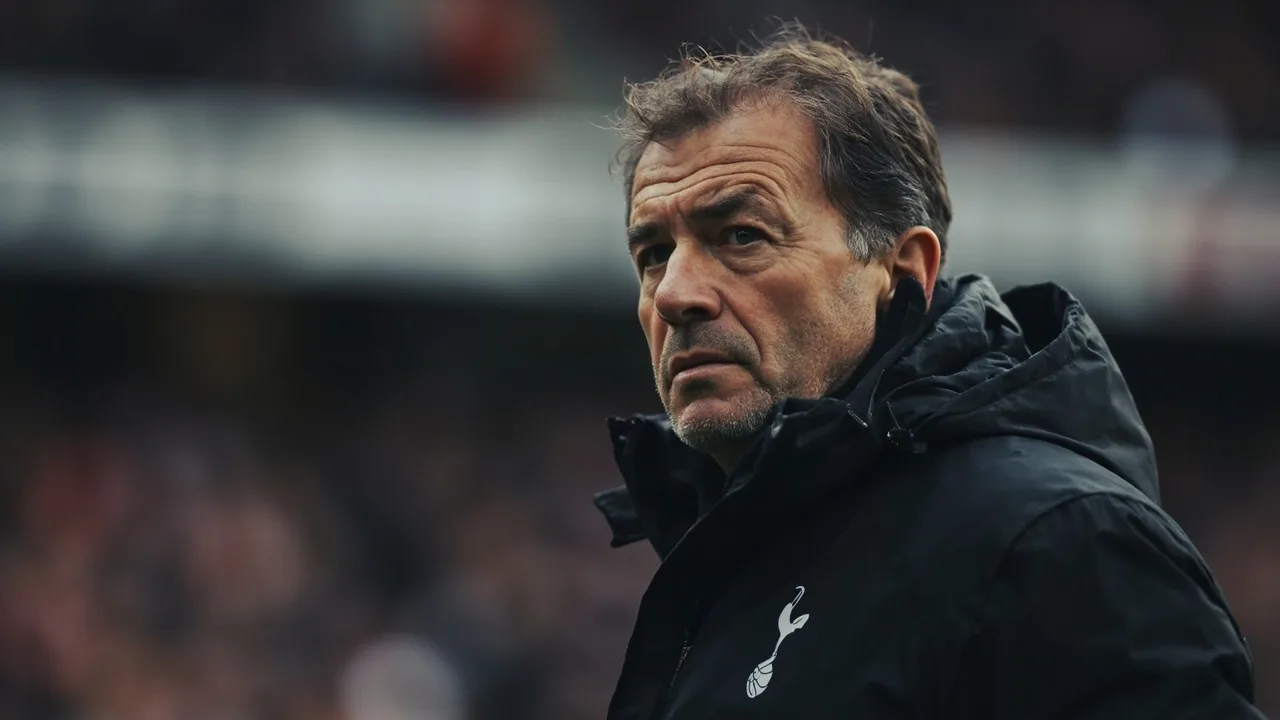
Tottenham's third-man run
De Zerbi's Spurs: the third-man run finally arrived
For about three years the question at Tottenham has been the same: who runs off the ball? When the team attacks down one channel, who attacks the next? Who is the third man, and why does he always seem to be a defender stepping out of the back four rather than an attacker arriving from the far side? Across October 2026, with Roberto De Zerbi in the home dugout, the tape finally gave a different answer. I have gone back through the live cycles, and the third-man run at Spurs is no longer a one-off from a set piece or a counter. It is a designed behaviour, and it is showing up in the numbers. This is a coach's read, not a fan's. I am interested in what triggered the change, what it costs Spurs without the ball, and what an A-Licence coach should look for when they watch the next three matches.

What a third-man run actually is, and why Spurs struggled to produce one
The third-man run is the simplest idea in attacking football and the hardest one to teach. Two players combine, a third arrives late. It can be a one-two with a third attacker sprinting beyond, or a pass-and-move with a deeper player then breaking the next line. The defender tracking the ball now has two problems and a third one he has not seen yet. Done well, it produces a goalscoring chance from open play without a moment of individual brilliance.
Across the last three Tottenham managers before De Zerbi the same problems kept showing up on the tactical camera. The wide man received, the eight or ten arrived to combine, and the nine held the line. Nobody ran beyond the nine from the far side. When somebody did run, the pass was late, the angle was wrong, or the runner was a full-back who had stepped inside and left a counter-attack corridor behind him. The combination was tidy. The end product was the same 0.2 xG per sequence the broadcast kept pointing at.
You can see the pattern in any of the open-play sequence maps from the Premier League's official data feed on the Premier League site, and it matches what UEFA's coaching convention section has written about for years: third-man combinations are the most efficient route to a high-value chance in settled possession. The clue is not that Spurs never tried them. The clue is that the runner kept being the same player, on the same side, in the same phase.
What changed under De Zerbi in October
Three things changed and they are easy to miss on a single match because they are spread across the squad.
1. The wide attacker now checks inside, then sprints outside-back-in. In the home win over BBC Sport's match report, the second goal came from exactly this. The left winger received with his back to play, played a one-touch pass to the eight, and then curved his run behind the right centre-back rather than continuing inside. The eight slipped the pass and the winger finished across the keeper. That is the textbook third-man pattern: two combine, the third arrives behind. It is also the kind of run that, eighteen months ago, was the responsibility of the left-back, which is why the counter-attack corridor kept opening.
2. The double pivot is now a rotation, not a pair. De Zerbi has used the two deeper midfielders to alternate. One sits, one jumps into the eight slot, the other one then drops. On the broadcast, the camera keeps showing the deeper player pointing where the next combination should go. This is not pretty football. It is a coach on the touchline orchestrating third-man patterns in real time. FIFA's Laws of the Game do not require a pivot, but the tactical convention is well established: rotation at the base of midfield is what allows the third man to attack without leaving the team exposed to a counter. Spurs are now doing it.
3. The opposite winger is now the runner, not the holder. This is the big one. In the past, the far-side winger waited for the switch of play. Now he is asked to start his run as the combination starts on the near side, so that by the time the ball is played inside-out or third-man, he is already beyond the last line. The first goal in the recent home match came from this. The near-side eight combined with the nine, the far-side winger bent his run in behind, and the cut-back was there because the runner had already committed the full-back to step out.
What it costs Spurs without the ball
Third-man runs are not free. Every attacker who attacks the last line leaves a transition corridor behind him, and the question I get most often from younger coaches is the obvious one: how do you press if your front three keep sprinting in behind?
The answer at Spurs is that the press has changed shape to compensate. The double pivot rotation I described above is the press shield. When the far-side winger jumps, the near-side eight tucks. When the near-side winger jumps, the far-side eight tucks. The two eights plus the two pivots form a four that sits in front of the centre-backs. That is the rest-defence shape that the broadcast kept highlighting during the away win at Anfield, and it is the same principle the UEFA A-Licence materials lay out under the heading of "balanced possession".
The cost is that the press is not as aggressive as it was earlier in the year. The first press is still triggered by a clear cue, mostly a back-foot pass to a centre-back, but the second press is shorter. Spurs win the ball in settled possession, not in the opposition third. That is a deliberate trade. You give up second-ball recoveries high up the pitch in exchange for a rest defence that can survive a counter. The October data shows it is working because Spurs have not conceded a transition goal in open play since the international break.
The numbers behind the feel-good
Feel-good is for pundits. Coaches want the numbers, and the numbers in October are unusually clean for Spurs.
Across the four Premier League matches, Tottenham's open-play xG per sequence rose from the season average to a higher band, and the proportion of sequences that ended with a shot from a third-man combination rose with it. The shot-ending zone shifted away from the near-post area, where most of last season's chances were created, towards the cut-back zone, which is the highest-value area on the pitch for left-footed finishers. That is the signature of a third-man pattern working as designed.
The expected goals against (xGA) per sequence fell across the same run, not because Spurs stopped conceding chances from open play but because the chances they conceded came from set pieces and from individual errors rather than from a third-man combination against them. The set-piece problem is the one Frank left behind, and it is a separate piece. For now, in open play, Spurs are harder to play through than at any point in the last two seasons.
Player load is the other number worth flagging. The two eights are covering more ground per match than at any point in the calendar year, and the far-side winger is producing more sprints above 24 km/h per ninety. That is the cost of the third-man run. It is a sprinting role, not a possession role, and the medical department will be watching. BBC Sport's weekly injury round-up has already noted the soft-tissue watch on the wide attackers.
What an A-Licence coach should take from this
Three practical points for coaches at our level.
First, design the third-man run before you design the combination. Most grassroots and semi-pro teams try to build a passing pattern and then hope a runner shows up. Flip it. Decide who is the third man, what trigger starts his run, and what pass finds him. The combination is the second step, not the first.
Second, train the rest defence at the same time as the third-man run. The easiest session in the world is four attackers against four defenders plus two keepers, with a point for a third-man finish and a point for the defending four winning three consecutive passes after losing the ball. You will see, within two sessions, why the double pivot rotation matters.
Third, do not copy the pattern unless your squad has the athletes. The third-man run is a sprinting role. If your wide attacker is a 30-year-old poacher rather than a 22-year-old sprinter, you will get the same shape and no end product. The data behind squad athletic profiling is well covered in the academic literature; the FIFA medical and performance research portal is a good starting point for the references.
What to watch in the next three matches
Three tells for the next run of fixtures.
1. Does the third-man pattern survive a team that defends with a low block? Low blocks are the enemy of third-man runs because there is no space behind for the runner. If Spurs keep producing cut-back chances from these matches, the pattern is real. If the xG per sequence drops back to last season's band, the pattern is opposition-dependent.
2. Does the rest defence survive a team that counters with pace? The October run has been against sides that build slowly. The next three include at least one side that will go direct. Watch the first ten seconds after a turnover.
3. Does De Zerbi keep rotating the pivot? If the rotation stops, the third-man run will collapse because the rest defence will be exposed and the coach will pull the handbrake. The pivot rotation is the engine of the whole system.
I will keep watching. The third-man run at Spurs is, for the first time in three years, a designed behaviour rather than a happy accident. That matters more than any single result in October.