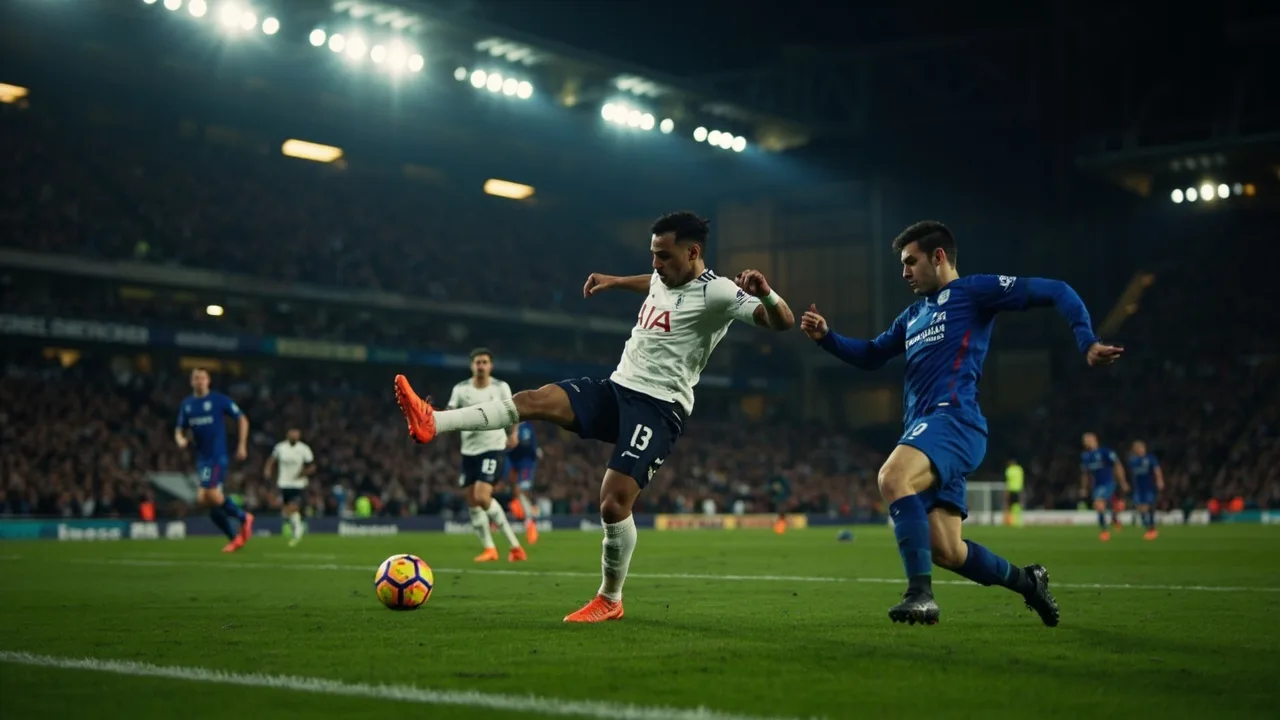
North London analysis
Spurs v Chelsea: The November pressing balance
There is a difference between a team that looks aggressive and a team that controls the danger of its aggression. Tottenham under Roberto De Zerbi are being judged on the second thing. Chelsea's November match is therefore less about who wins the first duel and more about whether Spurs can press without opening the central lane.

The pressing balance is the real test
When I talk about pressing balance, I do not mean splitting a match into neat categories such as attack and defence. I mean controlling when the team presses, how many players commit to the pressure and who remains available to deal with the pass that escapes it.
That distinction matters because the modern pressing debate is often reduced to a simple question: did the team win the ball back? The more useful question is whether the press improved the team's next possession. Did it move Chelsea towards a touchline? Did it make them play backwards? Did it slow the ball down and force a long pass? If the answer is no, the press may have created as much uncertainty for Tottenham as it did for the opponent.
The technical direction behind this approach is well established in elite football coaching. UEFA's analysis of pressing and possession play describes coordinated pressure as a means of influencing the opponent's decision-making, not merely winning a foot race. The important detail is the relationship between the first presser, the supporting players and the defensive balance.
For Tottenham, that means asking a very specific question about Chelsea's build-up: which player can safely step forward? If the answer is always the same, Chelsea can plan around the press before the match begins. If Tottenham have several ways to trigger pressure, the opponent cannot attack one static shape.
BBC Sport's match reporting and tactical analysis have repeatedly shown that the location of pressure and the speed of the second action matter more than an isolated statistic about duels won. I would use those reports as evidence of what happened on the pitch, then examine the sequence rather than treating one number as a complete verdict. Read BBC Sport's football coverage for match reporting and tactical observations.
First pressure and rest defence cannot be separated
Rest defence is the structure that allows a team to attack without surrendering the most useful passing lanes behind the ball. It is not a back line of players standing still. It is a network of positions and responsibilities that gives the first presser permission to go.
The concept has a substantial coaching and academic literature behind it. Research published in the Journal of Sports Sciences on tactical periodisation and team performance links tactical actions to the physical and spatial demands of the game. The practical lesson for a coach is that intensity without retention of shape is a false economy. A team can win three consecutive duels and still lose control because it has used its rest defence to win one moment.
Against Chelsea, Tottenham should not press with every player simply because the ball is on Chelsea's half. The danger is the pass into the inside channel after Tottenham's first line has jumped forward. Chelsea's midfielders are capable of turning that pass into a counter attack, and the corresponding run by their forwards can pull the centre backs into a dilemma.
The first team to arrive at the second ball is not necessarily the team that presses best. It may be the team that has made a sensible decision about where to leave the next defender. If Tottenham's wide player presses, the central midfielder can screen the inside pass. If the midfielder steps out, the full back may need to hold the width rather than join the press. These are small choices, but they are the difference between coordinated pressure and a hopeful chase.
Tottenham also need to distinguish between pressure and an attempt to win the ball instantly. A well timed delay can be more valuable than a reckless second step. If Chelsea's centre back is comfortable passing across the pitch, Tottenham should force the ball towards the touchline and keep the first press tight. If Chelsea play through the middle, the press should become more aggressive in shape, with the nearest midfielder curving his run to block the central lane.
What Chelsea can do to test Tottenham
Chelsea should not copy a rigid set piece answer to Tottenham's pressure. They should make the press change from one phase to the next. One player drawing a press can create a passing option for the next player, particularly if the supporting positions are too far apart.
The key is to make Tottenham's pressers choose. If the first press is always aimed at the centre back, Chelsea can use the goalkeeper's distribution to create a numerical problem. If the goalkeeper's long pass is too easy to contest, Chelsea can play around the first line and test the rest defence. If Tottenham protect that area perfectly, Chelsea can switch the point of attack and attack the space created on the opposite side.
This is why I would watch Chelsea's third man, not only their first pass. A first pass may be attractive and safe. The third man action reveals whether Tottenham have blocked the next line or simply reacted to the first one. Tottenham's midfielders need to be close enough to influence that action without leaving a dangerous pocket between the lines.
The same principle applies to Chelsea's wide players. If Tottenham's full back steps high to trap the ball, Chelsea's winger can hold position and invite the defensive midfielder to move across. That movement can create a passing lane for a supporting midfielder arriving late. If the full back stays disciplined, Chelsea may need to recycle possession and test the block rather than force the issue.
FIFA's technical resources on modern football stress the importance of decision-making, width and the relationship between attacking and defending positions. The relevant lesson is not that teams must always attack quickly. It is that the team in possession should know where the next pass is going, while the team out of possession should know where the next danger can begin. Explore FIFA's technical resources for guidance on decision making, spacing and possession play.
The small number that can change the match
Tottenham's pressing statistics can be impressive and still conceal a tactical problem. The number I would examine is the share of pressing actions that force the ball towards the touchline or backwards, alongside the number of pressures that allow a direct route through the middle.
That is not a decorative split. A press that drives play wide reduces the value of Chelsea's next possession. A press that concedes the inside lane gives the opponent a chance to create a numerical advantage around the edge of the box. The two outcomes can look similar in a possession chart but are completely different in risk.
BBC Sport's live and post match reporting often gives the raw numbers for possession, passes, duels and territory. I would read them alongside UEFA's and FIFA's explanations of tactical structure. A single number should never be treated as a complete tactical diagnosis, but a sequence of numbers can show whether De Zerbi's instructions are producing the intended effect. Compare BBC Sport's match data with the tactical principles outlined by UEFA and FIFA.
For Tottenham, I would also track how often the first press is supported within seconds. If the nearest support player is ten metres away, the opponent has time to turn. If the support arrives from a position that protects the centre, the press has a chance of turning the ball over without the team being stretched.
There is a further detail: the direction of the supporting run. A player joining the press from behind can close the ball carrier but leave the receiving zone open. A player joining from the front and inside can reduce passing angles. That is why the geometry of the press matters as much as the willingness to sprint.
My verdict on the November balance
My opinion is that Tottenham should be selective rather than relentless. Press Chelsea when the ball is visible, when the receiver is isolated and when the supporting positions are already close enough to protect the next pass. When Chelsea create a three player passing pattern in the middle, Spurs should cut the circulation and force a reset rather than diving into a trap that has no safe exit.
That approach gives the team a clearer identity under Roberto De Zerbi. The ambition is not simply to make opponents uncomfortable. It is to make them predictable. Chelsea should be able to predict that Tottenham will protect the central lane on the first third, attack the wide channel on the next action and then use the recovered ball to move forward before the opponent can reset.
The best evidence will come from the moments after Tottenham win possession, not only from the tackles that precede them. If the first pass goes forward, the press has worked. If it goes sideways simply because there is no immediate option, Tottenham may have bought time without buying territory.
That is the standard I would apply to the match. Not whether Tottenham pressed for a full ninety minutes, nor whether they won the ball back more often than Chelsea. The question is whether their pressure made Chelsea's next decision less useful.