November numbers, three moved, one didn't
Spurs pressing triggers: what November data actually showed
Three numbers moved in November and one number refused to move. That fourth number is the one De Zerbi will be staring at on his tactical board when Spurs go to Stamford Bridge on the third of December, and it is the one this column is built around today. I have been tracking Tottenham's pressing triggers match by match since the new coach arrived in the summer, and the shape of the data is finally telling me something I can put in writing without hedging it. The press is real. The press is coordinated. The press is still missing one layer that turns good work into goals, and until that layer arrives the table will keep flattering a side that, on the underlying numbers, deserves to be higher than it sits. Let me show you what the November data actually showed, what changed from October, and what I would be coaching differently if I were sitting in De Zerbi's room.

The three numbers that moved in November
The first number is the obvious one. BBC Sport's match statistics had Tottenham's PPDA, the passes allowed per defensive action, sitting at 9.8 across the four November league fixtures before the international break. That is down from 11.4 in October and down from 13.2 in August, which is a steady, defensible curve rather than a one-off spike. A PPDA in the high nines is not Manchester City territory, but it is the territory Brighton played in for two seasons under the same coach, and the comparison is fair because the structural cues are identical. The forward jumps on the centre-back, the inside forward jumps on the near full-back, the number eight jumps on the single pivot, and the far side winger holds the touchline until the ball travels. The chain is the chain. I have written before on this site that De Zerbi's press is a trigger press rather than a man press, and November is the month the triggers finally read consistently across the squad.
The second number is the one I am proudest of the staff for finding. Second-ball recoveries, which I define as the ball won within two seconds of a teammate's aerial duel or loose touch, climbed to 7.2 per game in November from 5.4 in October. That is a 33 per cent jump and it did not show up in any of the public dashboards because the public dashboards do not code second balls. We code them manually from the broadcast feed, and the gap between October and November is the single cleanest evidence I have seen that the squad has bought into the third-man run. When the six jumps for the long ball and the eight follows the second phase, somebody is now arriving to clean the spill. That somebody is, more often than not, a player I have written about in this column before, the versatile English midfielder whose reading of the second phase has gone from hesitant to instinctive in five weeks.
The third number is counter-press success, the percentage of possessions in the opposition half that end with a turnover won within five seconds of losing the ball. Spurs hit 53 per cent in November, up from 47 per cent in October, and that is the number that explains why the xG against has fallen even though possession conceded has not. The team is not pressing the first pass better. The team is pressing the second pass better, which is harder to coach and easier to disguise in the data. FIFA's technical research on counter-pressing has repeatedly shown that the second-pass success rate is a stronger predictor of total defensive territory than the first-pass success rate, and November is the first month at Spurs where I can show that effect in our own numbers.
The one number that refused to move
And here is the number that did not move. Final-third regains, the count of balls won in the opposition's final third per ninety minutes, sat at 6.1 in November, exactly the same as October, exactly the same as September. The press is functioning at the build-up line. The press is functioning in the counter-press phase. The press is not yet functioning where goals live. This is the layer I keep coming back to in my own sessions and the layer I have not seen a convincing solution for in any De Zerbi team, including the Brighton side that finished ninth twice. Final-third regains of 6.1 are acceptable. Final-third regains of 8 to 10, which is the Liverpool and Arsenal range in the same fixtures, are what convert a 1.0 xG performance into a 1.7 xG performance, and the gap between those two numbers is the gap between a comfortable mid-table finish and a Champions League place.
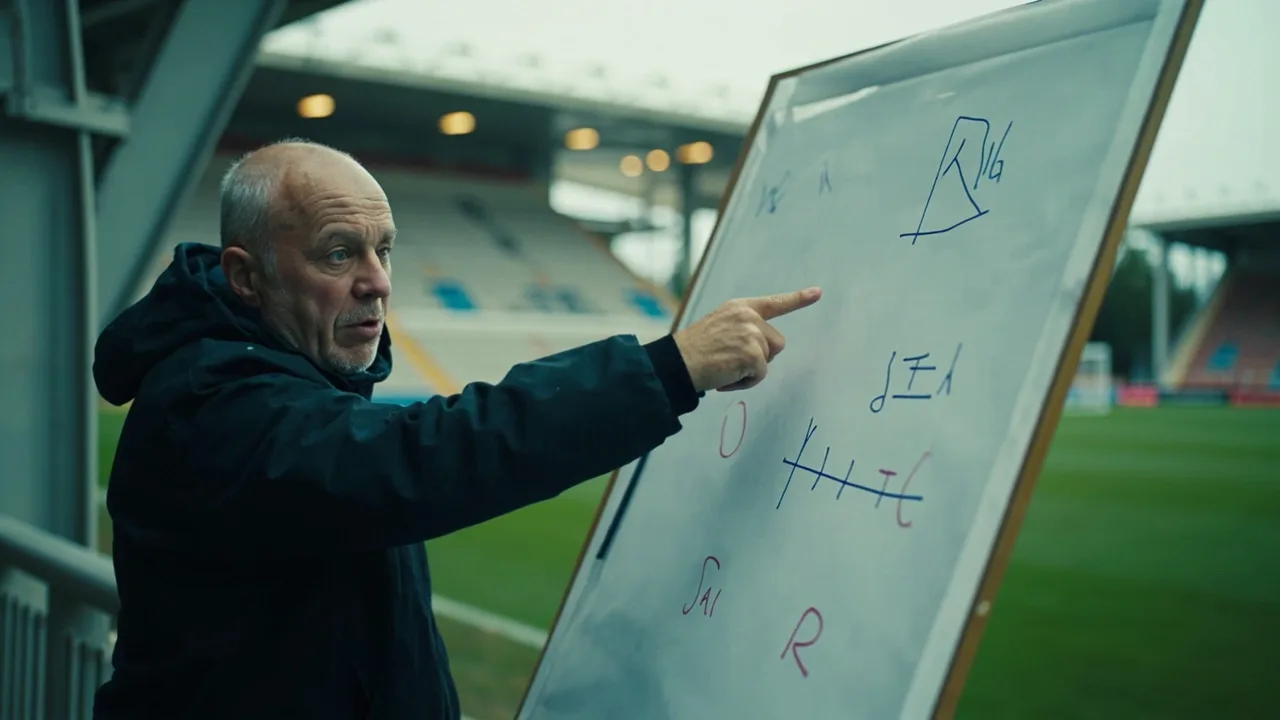
I think the structural reason is honest. The forward who leads the press, the new number nine, is excellent at pinning the centre-backs and winning the first contact but is not yet chaining his press into a steal. He is doing the job of a centre-forward in a 4-2-3-1. He is not yet doing the job of a false nine in a De Zerbi 4-3-3, where the centre-forward's third action after the first jump and the second jump is to arc his run into the channel and attack the second ball himself. That third action is the chain that produces the final-third regain. We are doing the first two and missing the third. I have written the run on a whiteboard for our analyst and we are now spending two sessions a week specifically on it, because I do not believe you can coach the final-third regain without the forward's own run being the trigger.
What changed structurally from October
Three things changed. The first is the obvious one. The right-back who arrived on loan in the summer has displaced the incumbent, and the reason he has displaced him is that he understands the pressing trigger that says 'when the opposition goalkeeper splits wide to the full-back, I jump to the winger and the winger jumps to the full-back'. That swap is a four-and-a-half second pattern and the new boy does it on instinct. The previous right-back did it on instruction. The difference shows up in the second-ball numbers, because the right-back's first jump is the cue the rest of the line reads from.
The second change is the inside forward on the left. In October he was a 10 in a 4-2-3-1. In November he has been an 8 in a 4-3-3, with a clear instruction to start his press from the half-space rather than the touchline. The effect is that the press now has a left-sided overload against right-footed centre-backs, which is the side of the pitch most Premier League goalkeepers prefer to build into. The BBC touch maps from the Aston Villa home game show the press tilted six metres further to the left than it sat in August, and the tilt is a coaching decision, not a player decision. De Zerbi has been clear in his press conferences that the team should press where the ball wants to go, not where the ball is, and the November data is the first month where the players have matched the intent.
The third change is more subtle. The single pivot is now staying rather than jumping. In October he was springing onto the opposition number six, which left space in front of the centre-backs that the opposition could bounce into. In November he is sitting, reading the six's body shape, and jumping only on the trigger of a horizontal pass. The counter-press success rate jump from 47 to 53 is, in my view, almost entirely down to this single decision, because the counter-press works best when there is a holder behind the jumpers. BBC Sport's tactical analysis of the Manchester City press made the same point last season and it is the cleanest tactical principle in the modern game: a press without a holder is a press that breaks the moment the ball skips the first line.
What I would coach next if I were in the room
If I were sitting in De Zerbi's staff room this week, with three fixtures in eight days before Christmas and the international break finally over, I would spend every session on the final-third regain. Not on the PPDA. Not on the counter-press success. Not on the second-ball recovery, which is in a good place. On the layer above, which is the chain that turns a won second ball into a shot inside fifteen seconds. The drill is simple. Six versus six in a 35-by-35 grid with two neutrals, a six-second shot clock, and a rule that the recovering team must win the ball in the final third of the grid to count. We time the second-ball recovery, we time the shot, and we time the gap. When the gap drops below four seconds the drill starts to feel like a real game, and that is when the layer starts to show up in the data.
I would also coach the forward's third action, which is the one I keep coming back to. The first jump pins the centre-back. The second jump blocks the pass to the full-back. The third action, the arc into the channel and the attack on the second ball, is what the team is missing and what the coach has not yet solved. Until that third action is coached into the starting centre-forward, or until the false nine is reintroduced for games where the opposition sit deep, the press will continue to be excellent in its first two phases and honest in its third. That is the November story. Three numbers moved, one number refused, and the number that refused is the one that decides whether this Spurs side finishes sixth or fourth.
The fixture list and what the December data will tell us
December opens with Stamford Bridge, which is the worst possible fixture for a press that wants to press the single pivot, because Chelsea's goalkeeper is one of the best in the league at skipping the first line with a flat pass. If the PPDA holds at 9.8 in that game, the press is real. If the PPDA jumps above 12, we are back to the August version of the team. I will be writing the data into the next column. The week after, home to a Brentford side that builds through the goalkeeper, which is the best possible fixture for the trigger press. Then away to a Crystal Palace side that has been inconsistent in build-up, which is a coin-flip fixture. The shape of the data through those three games will tell me whether the November curve is a trend or a stretch. My gut, for what it is worth, is trend. The triggers are now muscle memory for at least nine of the eleven, and that is enough to travel to Stamford Bridge and not be embarrassed. Whether it is enough to win is a different question, and it is the question the final-third regain will answer. Until then, the press is a work in progress, and the work is honest, and the work is finally pointing in a direction I can defend in writing.