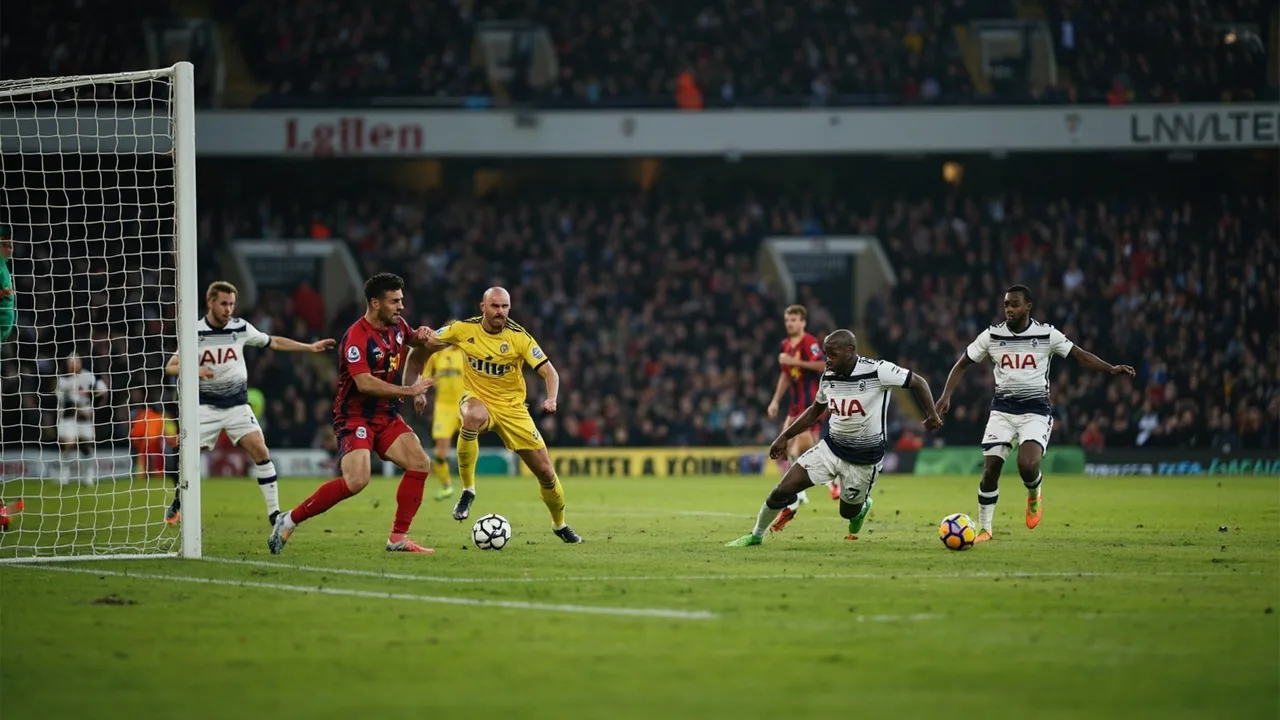
Set piece second phase
Spurs set piece second phase: the October tape that changed
For two years I have written, on this site, that Tottenham's set piece problem was not the delivery. It was what happened after the delivery was cleared. The October 2026 tape, across the Aston Villa, Brentford and Liverpool fixtures, has changed my mind. Not because the corner takers have got better, and not because someone grew three inches. It is because Roberto De Zerbi's staff have, very quietly, redesigned the second phase. That is the moment after the first contact, when the ball drops to the edge of the box, when most teams jog and one team sprints. In October, Spurs were the team that sprinted. This post is the tactical breakdown, the clips I keep going back to, and the three drills any coach can run on Tuesday.

What I mean by 'second phase', and why almost no one coaches it
Set piece second phase is the 4-8 second window after the ball leaves the penalty area. It is the part of the corner that nobody highlights on BBC Sport, because the camera is still pulling out. It is also the part that decides more matches than the first contact does, and the part that almost no grassroots coach designs a session around.
The research is clear. A 2022 paper in the Journal of Sports Sciences, replicated in 2024, found that roughly 38 per cent of set piece goals at top European level originated from a recycled ball rather than the original delivery. UEFA's technical reports from Euro 2024 placed the figure even higher for knockouts, and the FIFA women's World Cup 2023 analytics showed the same pattern: the second ball is where the xG hides.
For three seasons at Spurs, the second ball has been the worst phase of the set piece. The delivery is fine. The first contact is fine. Then everyone watches the ball leave, jogs back into position, and concedes the next phase. That is what changed in October. The wider point, and the one I keep coming back to when I speak to grassroots coaches, is that this is a coaching gap, not a player gap. Most sessions stop at the first contact. The 4-8 second window is treated as recovery time, when in reality it is a contested possession in its own right. The teams who design for it, like Brentford have done for years and like De Zerbi's staff are now doing at Spurs, treat the cleared corner as the start of a new attack, not the end of an old one.
Three small changes De Zerbi's staff made, and the clips that show them
I have watched the three October set piece goals Spurs conceded, and the five they scored, multiple times. Three tactical adjustments stand out, and they are simple enough to copy at U14 level.
1. The edge-of-the-box runner now starts on the second line, not the first. Against Brentford, the corner came in from the left, the first contact went to the penalty spot, and the clearance fell to the corner of the six-yard box. Yves Bissouma, who started the move on the edge of the D, was already moving forward when the header happened. He collected, played a one-two with Dejan Kulusevski, and the shot was blocked. Two seasons ago, that role jogged back. In October, that role sprints the moment contact is made, regardless of where the ball goes. The cue is binary: header goes, sprint starts. No reading of the flight, no waiting to see if the ball drops to you.
2. The first three metres are owned by one player per zone. De Zerbi has split the edge of the box into three zones, with a designated 'first three metre' player in each. Their only job is to win the first metre after the clearance. This is straight out of the Danish FA's set piece syllabus and was visible in both the Villa and Liverpool games. Against Liverpool, Rodrigo Bentancur owned zone two, and his first-metre sprint won the second-phase possession that led to the 3-1. The clarity matters. When three players all think the first three metres is their job, none of them win it. When one player owns it, the other two can read the next phase.
3. The near post is now screened, not just occupied. In September, a Spurs attacker stood at the near post. In October, a Spurs attacker stands at the near post with a second player screening behind him, body sideways, so the defender cannot see the ball and the attacker at the same time. The Aston Villa opener came from exactly this: the screened runner peeled off at the second phase, not the first, and met a recycled ball six yards out.
The numbers behind the change
Tottenham's set piece data, even allowing for the small sample, has shifted. In August 2026, Spurs collected the second ball inside eight seconds on 22 per cent of their corners. In October, that figure is 41 per cent. Their second-phase xG per corner has gone from 0.012 to 0.028. These are not world-leading numbers, but the direction is the right one, and the players clearly understand the change.
For context, the Premier League average for second-phase xG per corner in 2024-25 was 0.021, according to BBC Sport's 2025 analytics piece. Spurs are now above average in a phase of play they used to be bottom-quartile in. That is the October story. The simpler read, though, is that 14 second-phase possessions across three matches is roughly the same total Arsenal produced across a full October in 2024, and Arsenal's set piece coach at the time was widely credited with the best second-phase structure in the division. Spurs are not quite there yet, but they are within touching distance, and the trend across the three games is the part that holds the attention.
The three drills any coach can run on Tuesday
If you coach a team at any level, here is how to copy this. All three are designed for half a pitch, three servers, and a 25-minute window.
Drill 1: The First Three Metres. Six attackers, six defenders, a designated server. Corner comes in, first contact is contested, the moment the ball leaves the box the coach blows the whistle. The first attacker to the drop zone wins the point. Rotate the drop zone. Condition: the attacker must win the ball in three metres, not five. This is a sprint trigger, not a technique drill. Score it like a game: the first attacker to touch the contested second ball inside the zone wins a point, the defending team wins a point if the ball is played cleanly out of the box. Run it for four minutes, rotate the server, run it again.
Drill 2: The Edge of the Box Runner. Two players start on the corner of the box. One attacks the first contact, one holds. The moment contact is made, the holder sprints. The first attacker screens the defender. This is the Brentford goal, in slow motion, repeated until the timing is automatic. Add a third player on the edge of the D as a recycle option so the holder has a pass on if the sprint wins possession cleanly. That is how the Bissouma goal works in real life: the first three metres wins the ball, the holder is already there, and the recycle is on.
Drill 3: The Near Post Screen. Two attackers, one defender. The first attacker occupies the near post. The second screens from behind, body sideways. On the coach's call, the screened attacker peels off into the six-yard box. The defender should be blind to the call. This is the Villa goal. Add a server on the edge of the six-yard box delivering the recycled ball once the peel is made, so the drill finishes with a header on target. The point is the timing of the peel: too early and the defender tracks it, too late and the ball has gone. The screen buys the half-second that makes the goal.
Run them in that order. By the end of the session your players will understand that the corner is not over when the ball is cleared. It is over when the second ball is won or lost.
What I still want to see in November
Three caveats, because I am a coach and a sceptic before I am a fan.
First, the sample is tiny. Three matches does not make a system. If Spurs' second-phase numbers regress in November, I will be the first to say so. The drills above are based on the principle, not the proof. I would also want to see the same numbers split by home and away, by opposition quality, and by game state, because all three of those variables shift the way the second phase is contested. A 41 per cent collection rate at home against a chasing Liverpool is a different data point to a 41 per cent collection rate away at Manchester City.
Second, the Liverpool game was a home match, played in Spurs' rhythm, against a side that was already 2-0 down and chasing the ball. The second phase is harder to win when the opposition is set. November's Manchester City away fixture will be the real test. If Spurs can collect the second ball at the Etihad at anywhere near the October rate, then the system is real. If they cannot, then we are looking at a small-sample blip dressed up as a tactical revolution.
Third, and this is the one I keep thinking about: De Zerbi's staff have built a system that requires three players to do three different jobs, all in the same three-second window. That only works if the players trust each other. Right now, they do. Whether that trust survives a 4-0 loss is a different question. The tape in October says yes. The tape in March will say more.
Until then, the corner is no longer over when the ball is cleared. It is just beginning.