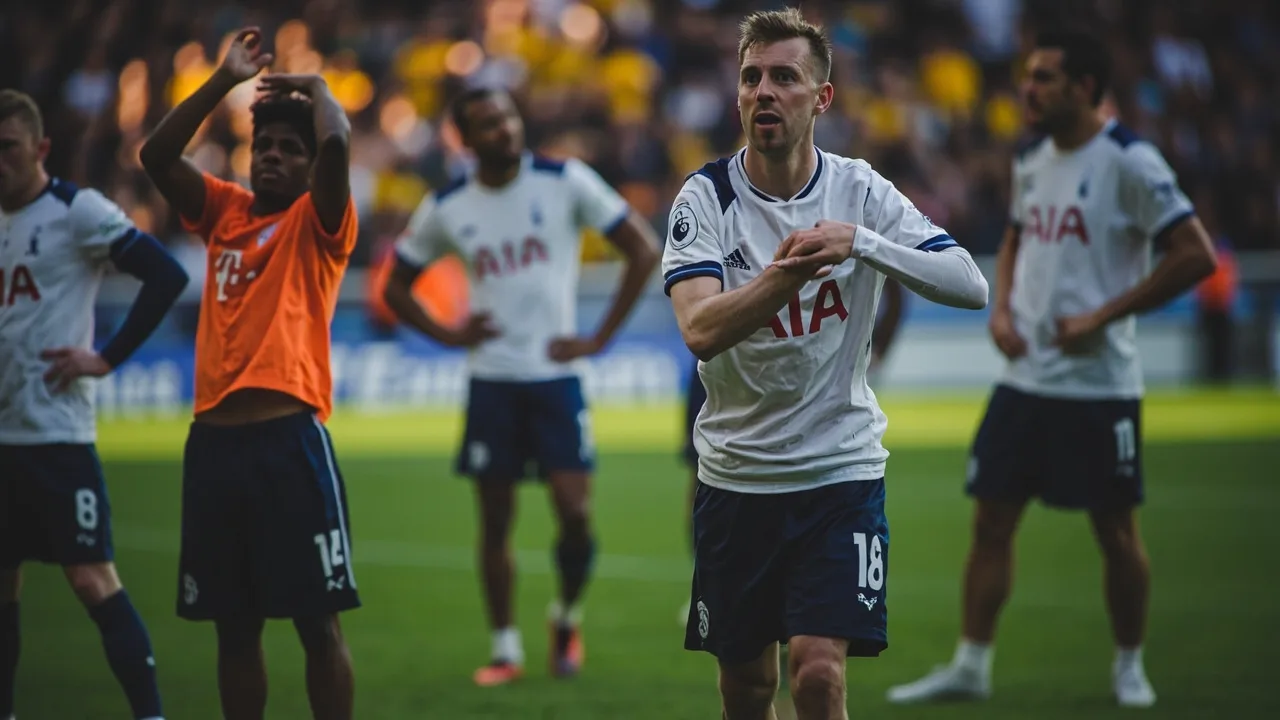
Tottenham Hotspur tactical analysis
Tottenham vs Fulham: the defensive balance
Tottenham versus Fulham is likely to be described as an open London duel, but the most useful way to read it is through the space between the lines. Roberto De Zerbi's Spurs need their midfielders and full backs to move as one connected structure, then leave one controlled channel for Fulham to enter. If Spurs become reactive, the game becomes difficult because Fulham can attack quickly through the central lane and switch play. My view is that Tottenham's best balance will come from patient possession, intelligent rest defence and a press aimed at the angle rather than the player.

The first question is what Fulham will do with the ball
Fulham's challenge will not simply be to pass around Tottenham. Their aim will be to pull the centre towards the ball, create a lane for one attacking midfielder and move it towards the far post. Spurs therefore need to make the central player receive facing his own goal, not with a free run towards the box.
Roberto De Zerbi has used a more aggressive identity than Thomas Frank's Tottenham side, but aggression is not the same as chasing every pass. The important distinction is between a press that attacks the receiver's preferred direction and one that merely closes the nearest opponent. The first can recover possession in a dangerous area. The second can leave the next passing lane open.
That idea is consistent with UEFA's analysis of modern pressing, which stresses compactness, coordinated timing and attacks on unstable players rather than isolated individual duels. A useful reference is the wider coaching literature on team shape and coordinated defensive transitions: a team should press towards itself, so that a forced pass becomes another action rather than a fresh opportunity for the opponent.
Against Fulham, I would expect Spurs to be especially alert to the pass into the left half of the pitch. Fulham's left-sided combinations can pull the right full back and right centre back away from the centre. The response should not be an immediate, aggressive jump. It should be a collective movement in which the nearest player delays the forward ball, the central midfielder protects the inside pass and the back line holds its width until the ball is safely recycled.
BBC Sport's match reporting and tactical coverage should be used alongside video rather than as a substitute for it. Numbers can tell us where the pressure came from, but the crucial detail is whether Tottenham's nearest defender had an angle to the next receiver. The BBC Sport football section is useful for the sequence of events and substitutions; the review of the actual footage will show the timing.
Rest defence must protect the right kind of space
Tottenham's rest defence should not mean every player retreating into a block. That would surrender the initiative and make Fulham comfortable. The better interpretation is that the team keeps a safe outlet for the ball carrier, has at least one player behind the first line of pressure and prevents the opposition from turning a turnover into a straight run at goal.
The key relationship is between the pivot and the two centre backs. If the pivot is too far forward, Fulham can play through the first line and leave the centre backs isolated. If the pivot drops too deeply, Spurs lose access to the space in front of Fulham's midfield. The solution is a small movement that depends on the phase of possession: the pivot may step towards a flank while a centre back or full back drops into the rest of the structure.
This is why the full backs matter so much. A right back who advances high and narrow can leave a large diagonal space behind him if Fulham's left winger receives between the lines. A right back who stays rigidly deep allows Fulham to build without pressure. The strongest option is usually to keep one full back conservative and use the other to create the overload that gives the team a passing exit.
Academic work on team coordination and defensive positioning reinforces the need to judge the unit, not the individual. The full back's decision should be linked to the distance of the ball from the penalty area, the position of the nearest opposition midfielder and whether the centre backs can cover behind. In that context, Tottenham's rest defence is not a line of players but a network of obligations.
Against Fulham, I would be watching the moment the ball is lost. Not the number of turnovers in isolation, but the location of the turnover and the distance between Tottenham's first and second lines. A turnover in the central third is survivable if the rest defence is connected. A turnover close to the box is an emergency. That is why FIFA's guidance on modern football and elite club training place so much emphasis on transition routines, scanning and immediate support options.
A selective press can be more dangerous than a full press
Fulham will have moments when they play out from the back. Tottenham should press those moments with a clear trigger rather than with general urgency. The trigger might be the centre back receiving with his back to goal, a weak pass towards one full back or the goalkeeper holding the ball long enough to shape the opposition.
The press should begin with the nearest player blocking the obvious forward pass, not with the entire team sprinting at the ball. The central midfielder can then screen the first central option, while the far side protects against a switch. If the ball goes backwards, Spurs can release the pressure and reorganise. This is the difference between a pressing trap and a chasing exercise.
The 2026 Tottenham data will be most useful when it is combined with match film. Pressing numbers can look impressive if the team spends long periods in the opposition half, yet the relevant metric is the quality of the recoveries: did Tottenham regain the ball in a position to attack, or simply win a duel and immediately face a counter attack?
Fulham's ability to play through pressure matters here. Their technical quality means that Tottenham must make the first receiver turn towards the touchline. A trap that forces the ball into the winger's feet, where the winger cannot see the central pass, can be effective. A trap that merely sends players forward can allow the midfielder to step into space.
On the other side, Tottenham need a rehearsed response when the first press fails. The centre backs should hold their positions, the pivot should drop into the passing lane and the full back opposite the ball should remain available. These are simple instructions, but they require constant practice. The UEFA coaching and performance resources are valuable for understanding how elite teams train pressing actions, game-state management and coordinated rotations.
What to watch for in the first twenty minutes
The first twenty minutes should reveal whether Tottenham are prepared to accept a slower rhythm. De Zerbi's Spurs will want to create attractive football, but attractive football without rest defence can be punished. I would look for three details.
First, the distance between Tottenham's midfield and defence when Fulham circulate the ball. If the lines are too far apart, Fulham can find a free pass. If they are almost joined, Tottenham may lack the room to press.
Second, the orientation of the first press. If Tottenham's nearest player is chasing the ball from behind, Fulham have a time advantage. If he arrives from the front side and forces play towards the touchline, the press has a chance of becoming a trap.
Third, Tottenham's width. When Fulham move the ball across the pitch, the far full back should not remain level with the near full back in a way that opens the central diagonal. One player may stretch the pitch; another must protect the inside. That is the sort of detail that can determine a close match.
Set pieces will also matter. Fulham have used varied routines to create second-phase advantages, so Tottenham should be wary of treating every delivery as an isolated duel. The nearest attacker may need to block the first line of the run rather than attack the ball immediately. The defensive wall, goalkeeper and first two defenders need a shared assignment.
BBC Sport's Premier League coverage will provide the verified line-ups, goals and substitutions for this fixture. Those details should be checked before drawing tactical conclusions. The argument here is about the plan Tottenham should use if they want to control the game without becoming reckless.
My conclusion: control the game before chasing it
Tottenham's best route against Fulham is not to outrun them in a foot race. It is to make the pitch feel narrow in the central areas, give Fulham one safe side to move towards and then punish the next misplaced pass. Roberto De Zerbi's Spurs need to combine ambition with a clear understanding of what happens when the ball is lost.
If the rest defence is connected, a selective press can produce recoveries in dangerous areas and the game will suit Tottenham. If the team presses without shape, Fulham's direct passes can bypass the first line and expose the channels behind the full backs.
That is why I expect this fixture to be decided by small margins: the first pass out of pressure, the timing of the pivot's drop and whether Tottenham's full backs arrive at the same moment. The headline may be an individual goal or a fine save, but the underlying story will be whether Tottenham managed the balance between attack and protection.